How to Use SMART Recovery Alongside 12 Step Support
Can SMART Recovery and 12 Step support work together without pulling you in two directions If you are staring at meeting lists and feeling torn, that is normal. Many people in early recovery want structure, but they also want tools that fit their beliefs. Some want a spiritual frame. Others want a secular one. The […]

Can SMART Recovery and 12 Step support work together without pulling you in two directions
If you are staring at meeting lists and feeling torn, that is normal. Many people in early recovery want structure, but they also want tools that fit their beliefs. Some want a spiritual frame. Others want a secular one. The good news is that these paths do not have to compete with each other.
Why people in early recovery often feel stuck between secular tools and spiritual support
A lot of people coming through Delray Beach rehab feel pressure to pick a lane too quickly. That pressure can feel heavy when you are also dealing with detox fears, shame, or uncertainty about insurance. You may worry that one group will judge you for using the other. You may also worry that mixing tools means you are not “doing recovery right.” That fear is common, and it usually fades once you see that recovery works best when it is personal.
Here is something many online guides do not say clearly: recovery is not a loyalty test. SMART Recovery and 12-Step support can sit side by side without canceling each other out. One can help you think through a craving at 9 p.m. The other can get you to a meeting when you do not trust your own mind. In South Florida, where the recovery community is active and varied, that mix is often practical rather than philosophical.
What SMART Recovery adds when meetings alone are not enough for cravings and urges
SMART Recovery gives you concrete tools for urges, habits, and thinking traps. It uses self-management and recovery training principles, along with coping skills, goal setting, and self-empowerment. That matters when your brain is telling you to use right now. The structure helps you pause, examine the trigger, and choose a different action.
On projects we’ve finished this year, the people who did best with evidence-based recovery support and coping skills usually wanted something they could use between meetings. A young adult from Boca Raton once described it bluntly: “I could stay sober in group, but I fell apart after dinner.” He started using a thought log, a craving rating scale, and a replacement plan for late evenings. That did not solve everything overnight. It did give him a way to interrupt the spiral before it got loud.
Where AA or NA still fits when accountability and peer support matter most
AA and NA still offer something powerful: shared experience with people who have lived through the same kind of chaos. For many people, the sponsorship piece creates a steady line of accountability. A home group also gives you continuity, which matters when your week feels scattered by work, court dates, or family stress. When shame is high, simply walking into a room where people already understand can lower the pressure.
The part most people miss is that mutual support groups and SMART can meet different needs. AA or NA may help you show up, stay honest, and build connection. SMART may help you handle a craving, manage a trigger, or challenge a thought like “one drink won’t matter.” That division is useful. It keeps each tool in the lane where it works best.
Why mixing recovery pathways can be a strength rather than a contradiction
Combining SMART Recovery with AA meetings is not a sign of confusion. It is often a sign that you are paying attention. Recovery rarely breaks down for one reason only. You may need skills, support, structure, and meaning all at once. A single group usually cannot cover every layer.
Here is a simple way to think about it:
- SMART helps with thinking, urges, and decisions.
- AA or NA helps with belonging, accountability, and repetition.
- Clinical care helps with diagnosis, safety, and stabilization.
- Family support helps with home life and follow-through.
That combination can feel especially helpful in a coastal recovery setting like Delray Beach, where people often move between treatment, work, and community meetings in a single day. You do not have to choose between spiritual and secular support if both help you stay honest and grounded.
The real difference between self management tools and mutual support in recovery
The difference between SMART and 12-Step support is not just style. It is function. SMART focuses on the mechanics of behavior change. 12-Step groups focus on fellowship, tradition, and long-term accountability. When you understand that difference, you can use both more wisely.
How SMART Recovery uses coping skills, goal setting, and self empowerment to support daily change
SMART Recovery is built around practical tools. People learn how to notice the thought before the action. They set realistic goals. They practice coping skills for relapse prevention and trigger management. This approach connects well with cognitive behavioral therapy in recovery, which helps you challenge distorted thinking and replace it with more useful choices.
In clinical terms, that is a form of cognitive restructuring. In plain language, it means you stop believing every thought your brain throws at you. If the thought is “I already blew it,” SMART helps you answer back. You can say, “No, one hard night is not the end of the week.” That may sound simple. It is not always easy. But it is learnable.
What the 12 Step model offers through structure, sponsorship, and shared experience
The 12-Step model gives you structure that reaches beyond one meeting. It creates rituals, a sponsor relationship, and a language for honesty. Many people find comfort in that rhythm. It can reduce the loneliness that often sits under substance use. It can also give you a place to practice accountability before life gets messy again.
For people dealing with mutual support groups and peer support in recovery, the value often lies in repetition. You hear the same truths from different voices. You see people with more time in recovery. You notice that bad days do not automatically become bad lives. That steady exposure can change how you think about long-term recovery support.
When CBT based thinking skills and peer support solve different problems at the same time
CBT-based thinking skills and peer support solve different problems at the same time. That is why they work well together. One deals with the internal loop. The other deals with the social one. If you are angry, anxious, or ashamed, a meeting may calm the emotional weather. If you are caught in a thought trap, a coping worksheet may interrupt it faster than conversation can.
A man in a Palm Beach County outpatient program once described it this way: “I needed the meeting to get out of my head. I needed the worksheet to stay out.” That captures the split well. Support helps you survive the moment. Skills help you change the pattern.
How to tell whether you need more emotional regulation, more connection, or both
This is the part many people overlook. Ask yourself what actually breaks down when cravings hit. If you spiral fast, you may need more emotional regulation. If you isolate, you may need more connection. If both are true, you may need both systems running at once. That is not a weakness. It is useful information.
Try this quick check:
- If you feel flooded, focus on grounding skills, breathing, and thought logs.
- If you feel alone, increase peer meetings and sponsor contact.
- If you feel disorganized, simplify your weekly plan.
- If you feel hopeless, bring the question to a clinician, not just a meeting.
That kind of honest sorting is often the difference between drifting and recovering with purpose.
How to build a recovery plan that uses both systems without confusion
A good recovery plan should feel steady, not crowded. You do not need every tool every day. You need the right tool at the right time. The goal is clarity. That matters even more when you are also in PHP, IOP, or outpatient care.
Choosing which meetings to attend when your week already includes PHP, IOP, or outpatient care
If your week already includes PHP or IOP support in Delray Beach, add meetings with intention, not obligation. PHP, or partial hospitalization, gives you more clinical structure. IOP, or intensive outpatient, gives you more flexibility. Outpatient care gives even more room to test skills in daily life. Your meeting plan should match that level of support, not compete with it.
A practical schedule often looks like this: one or two SMART meetings for skills, one AA or NA meeting for continuity, and one contact point with a sponsor or recovery peer. That is enough for many people. More is not always better. Too many meetings can make you tired and less honest. Too few can leave you isolated. Balance matters.
Using SMART tools for trigger management while keeping a 12 Step home group for continuity
A home group gives you a place to return to. SMART gives you a way to respond when the trigger hits before the meeting. That combination is strong because it covers both the moment and the routine. You can use SMART tools to plan for cravings, then bring the outcome back to your 12-Step home group.
Think of it this way: your home group is the house. SMART is the toolbox. One gives you a place to belong. The other gives you the means to repair what is breaking down. If you have a hard Friday night, you can write the trigger down, rate the urge, and bring that story to your next meeting. That keeps recovery active instead of vague.
Pairing journaling, thought logs, and cravings plans with step work and sponsorship
Journaling sounds simple, but it can expose patterns fast. Thought logs help you catch the moment your mind starts bargaining. Cravings plans tell you what to do before the urge peaks. Step work and sponsorship keep you honest about what is underneath the behavior. Together, they create a fuller picture than either system can create alone. 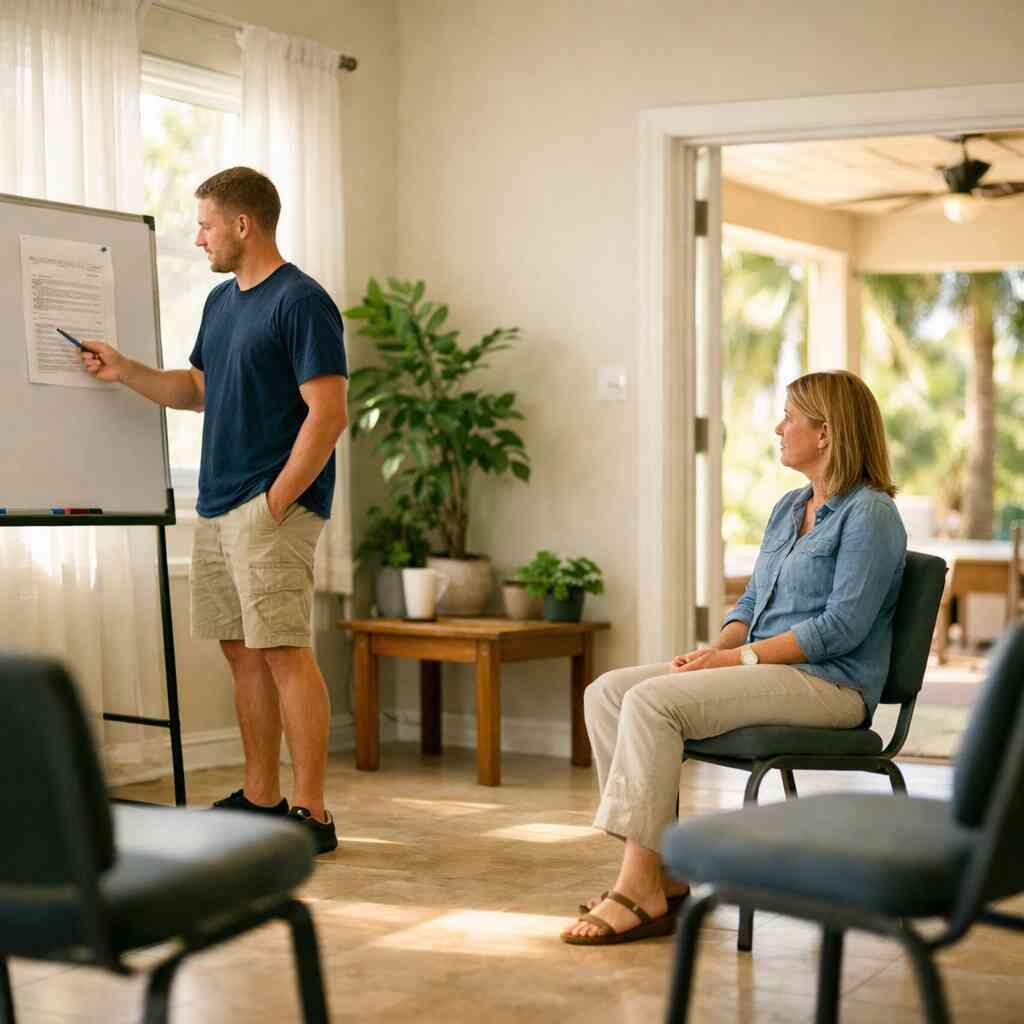
One woman in a residential treatment facility near Delray Beach kept three pages in her notebook. One page tracked triggers. One page held sponsor notes. One page listed what happened after each craving. She told us the notebook kept her from “rewriting the night later.” That is real value. Memory changes fast in early recovery. Written records help you stay grounded in facts.
How family therapy, case management, and aftercare planning can keep the plan steady
Recovery rarely lives in one room. It touches home life, work, sleep, money, and relationships. That is why family support in recovery and accountability can matter so much. Family therapy helps people speak more clearly. Case management helps remove practical barriers. Aftercare planning keeps the whole plan from collapsing when treatment intensity drops.
At RECO Health, that kind of coordination fits the broader continuum of care for long-term recovery. If you are dealing with relapse prevention strategies and aftercare planning, the question is rarely “Which group is best?” It is more often “Which supports keep me stable on ordinary Tuesdays?” That is the question worth answering.
Why dual diagnosis changes the way you choose support groups in Delray Beach
If you are living with anxiety, depression, trauma, or bipolar symptoms, your meeting choice may need more care. Dual diagnosis means substance use and mental health conditions happen together. That changes the picture. The group that helps one part may not address the other. In South Florida, where mental health and addiction services often overlap, this is a common and important distinction.
How anxiety treatment, depression and addiction, PTSD treatment, and bipolar disorder therapy shape meeting choices
Anxiety can make open meetings feel overwhelming. Depression can make it hard to leave the house. PTSD can make certain topics or crowds feel activating. Bipolar symptoms can affect sleep, judgment, and consistency. That is why mental health and addiction recovery in Delray Beach often works best when the plan is matched to your diagnosis, not just your substance use.
A group that feels too intense may not be a bad group. It may just be the wrong fit for this moment. If you are in early stabilization, you may need smaller groups, clearer structure, or more clinical support. If your symptoms are steadier, you may do well with broader peer meetings. Matching the group to the symptom load matters.
What to look for if trauma therapy South Florida is part of your care plan
If trauma therapy South Florida is part of your care plan, look for recovery spaces that do not push disclosure too fast. Trauma-informed support respects pacing, consent, and safety. It also understands that a trigger is not a moral failure. It is a nervous-system response. That matters in rooms where old memories can surface quickly.
A trauma-aware plan may include CBT, DBT, EMDR, grounding exercises, and careful group placement. The key is not to force yourself into the loudest room. The key is to find the room where you can stay present. That is often where real work begins.
When medication assisted treatment like Suboxone maintenance or Vivitrol injections needs to sit beside peer support
Medication-assisted treatment can be part of recovery, especially for opioid use disorders. Suboxone maintenance and Vivitrol injections are FDA-approved options that may help reduce cravings or support abstinence, depending on your clinical picture. They do not replace peer support. They can sit beside it. That combination often gives people more stability in the early months.
Here is a useful rule: medication treats biology, meetings treat connection, and therapy treats patterns. When all three work together, recovery tends to feel more manageable. If you are asking about fentanyl treatment, heroin recovery, prescription pill addiction, or benzodiazepine withdrawal, that layered support can matter a great deal. Clinical care should guide the medication piece. Peer support should help you keep showing up.
How a coastal recovery setting in Delray Beach can make sober living resources and community support easier to use
Delray Beach has a recovery culture that many people find helpful. The coastal setting can lower tension. Walking near the beach, spending time near Atlantic Avenue, or using sober things to do Delray can give your day a healthier shape. That does not cure addiction. It does make healthy routines easier to practice.
A local environment matters more than people think. When sober living resources are nearby, when meetings are accessible, and when the community understands recovery, follow-through gets easier. That is part of the value of South Florida recovery. The setting supports the structure, not the other way around.
The next move when you want structure, choice, and long term recovery support
If you are reading this because you are ready to act, keep the next move simple. You do not need to solve every layer today. You need to match your support level to your current risk. That begins with honest assessment, not pressure.
How to decide whether to start with detox, residential treatment, or an intensive outpatient track
If withdrawal is severe, start with detox. If safety, structure, or 24-hour support is needed, residential treatment may be the right fit. If you can stay stable with daily support and still manage home responsibilities, an intensive outpatient program may work. These levels are not about labels. They are about what keeps you safe and able to participate.
In Florida addiction treatment, the right level of care often depends on substance type, mental health status, and home stability. Alcoholism treatment center needs differ from cocaine detox Florida needs. Opioid rehab Delray needs differ from trauma-centered care. A good intake process should sort that out carefully. If you are comparing inpatient rehab Palm Beach County options or looking for a private rehab, ask how they handle co-occurring disorders and aftercare from day one.
What a strong aftercare plan looks like once treatment ends and the meetings become part of daily life
A strong aftercare plan is specific. It names meeting days, therapy follow-up, medication appointments, housing supports, and who you call if urges rise. It also includes coping skills for weekends, paydays, conflict, and fatigue. RECO Intensive reviews often reflect how much people value structure that continues after formal care ends, though every person’s experience is different.
Use this as a checklist:
- One recovery meeting style that you can keep.
- One backup meeting for rough weeks.
- One therapist or counselor.
- One sponsor or peer contact.
- One written relapse plan.
That kind of plan is plain, but it works because it is usable.
How to use alumni programs, relapse prevention planning, and sober support networks to stay grounded
Alumni programs can help bridge the gap between treatment and everyday life. They keep recovery visible after discharge. That matters when motivation dips, which it will at times. RECO Intensive alumni support can help maintain connection, and that aligns with continuing care best practices. Recovery is a process of repeated contact, not a single event.
Relapse prevention gets stronger when you keep the plan active. Review triggers. Update coping tools. Stay in touch with people who know your history. That is how long-term recovery support becomes part of life rather than a separate task.
When it makes sense to verify insurance, ask about admissions, and match your support style to the right level of care
If cost is on your mind, bring it up early. Ask about insurance verification, Aetna, Cigna, Blue Cross Blue Shield, out-of-network benefits, and self-pay options. A clear admissions conversation can prevent delays later. It can also help you compare Florida rehabs that take insurance without guessing.
If you are considering RECO Health at 140 NE 4th Avenue, Delray Beach, FL 33483, ask how their programs match your needs. Ask about the intake process. Ask about dual diagnosis treatment, case management, and aftercare support. Ask how their RECO Intensive recovery program options may fit your schedule and recovery style. The goal is not to impress anyone. The goal is to get the right support in place, then keep it steady.
Frequently Asked Questions
How long does detox last at a Delray Beach rehab?
Detox length depends on the substance, the dose, and your health history. Alcohol, opioids, benzodiazepines, and stimulants can all differ. Some people need only a few days. Others need longer medical monitoring. A clinical assessment is the safest way to estimate your timeline. If withdrawal could be dangerous, medical detox should come before other care.
What is the difference between PHP and IOP?
PHP, or partial hospitalization, usually offers more hours of treatment and more structure each week. IOP, or intensive outpatient, gives you more flexibility while still providing strong support. PHP often fits people who need more stabilization. IOP often fits people who can manage more of daily life while staying connected to care. The right choice depends on symptoms, safety, and home support.
Can I use SMART Recovery if I also go to AA or NA?
Yes. Many people use both. SMART can help with cravings, thinking patterns, and coping skills. AA or NA can help with accountability, sponsorship, and community. There is no rule that says you must choose only one path. The better question is which tools help you stay honest and steady this week.
Does dual diagnosis treatment matter if I also have trauma or depression?
Yes. Co-occurring disorders often change how recovery should be planned. If you have depression, PTSD, anxiety, or bipolar symptoms, support groups and therapy should be matched to those needs too. Treating substance use without addressing mental health can leave key problems untouched. A dual diagnosis plan helps connect the pieces.
Is family involved in the program?
Many treatment plans include family therapy or family education, especially when home stress affects recovery. Family support can improve communication and reduce confusion about boundaries and relapse prevention. It does not mean everyone agrees on everything. It means the family gets clearer tools. Ask the admissions team how family participation works in your level of care.
What if I need help for depression but not addiction?
That still matters. Depression treatment can stand on its own, and it should not be minimized. If substance use is also present, the two should be assessed together. Even if you are not seeking addiction care, a mental health evaluation can clarify the next best step. RECO Psychiatry and related mental health services may help if you need that kind of support.
*“I feel like RECO treatment is one of the best in Florida. I have been to several treatment centers and RECO is definitely better in almost every area. I can honesty say all the employees genuinely care. They go out of their way to help us navigate through early recovery The group facilitators are the best I’ve seen in treatment. Ms Engrid, Ms V and Rabbi Mark are unbelievable. Rabbi really breaks down the science behind the disease while Ms Engrid keeps it real with us and is always reminding us that we can make it. She really brings a lot of good energy around the NA program. Ms V comes in and she a wonderful therapist who really understands things from the family side. She really helps me understand what our families are going through. Hands down, RECO has the best group facilitators I’ve ever seen . I know of some peers that feel the same way
Brock really does a great job with the alumni department. As I am writing this, I am at a talent show put on by RECO. There are around 75 people here all having a great time sober. The entire event was put on well. Clients/ alumni made dishes and everyone is enjoying dinner while watching some amazing talent. I’m including pics from tonight. While going through some of my own struggles, I could really feel RECO’s support throughout the community. Brock was in contact with me on a daily basis just letting me know RECO was there for me. The support was overwhelming.
Led by Carly, The behavioral techs are fantastic. We spend a lot of time with the techs as they are always hanging with us at our houses outside of groups. They genuinely love their jobs and you can see it. The techs are fantastic in letting us know they are here for us and they show support in any way they can even if it’s just to listen to us vent about something we are struggling with. Brandon, Becky, Carlos and Brian especially go out of their way to help things go smoothly.
On the therapy side, they are also great. The clinical director, David, has been doing this a long time and he gets exactly what we are going through. You can see how passionate he is about his work when he runs group. There is a healthy balance with the entire team and I can see how much time they spend discussing clients. They know everything about us and I feel like that really helps us build a healthy relationship with our therapist. The medical staff is also great. Led by Kathaleen, the entire staff is always on point. Viviana, Kathaleen’s right hand lady, works her tail off making sure everything runs smoothly on the medical side.”- Buck F., a 5 star review from our business on Google Business Reviews*