
Can RECO Health Help with Cocaine Detox in Florida 2026
If cocaine use has shifted from occasional to frightening, that fear is real. You may be watching mood swings, sleepless nights, and a crash that feels heavier each week. In Delray Beach, families often wait too long because the person still looks functional. That delay can raise the risk. When cocaine stops feeling recreational and […]

If cocaine use has shifted from occasional to frightening, that fear is real. You may be watching mood swings, sleepless nights, and a crash that feels heavier each week. In Delray Beach, families often wait too long because the person still looks functional. That delay can raise the risk.
When cocaine stops feeling recreational and starts feeling medically risky in Delray Beach
The crash that sends people searching for cocaine detox Florida and drug rehab near me
The crash after cocaine can hit hard. People often describe deep fatigue, irritability, brain fog, and a low mood that feels nothing like a normal hangover. That is usually the moment search terms like cocaine detox Florida and drug rehab near me start making sense. The body is not just “coming down.” It may be signaling a pattern that needs medical support.
One parent in Palm Beach County once called after two nights without sleep and a panic-filled morning drive to work. Their son still said he was “fine,” but he could not finish a sentence without shaking. That kind of moment is common in South Florida recovery settings. It is also the kind of moment where early help can lower the chaos.
Why cocaine withdrawal can feel different from alcohol detox or opioid rehab Delray
Cocaine withdrawal does not usually look like alcohol withdrawal, which can involve dangerous seizures or delirium. It also differs from opioid rehab Delray because there is no classic physical dependence pattern like sweating, vomiting, or severe body pain in every case. Still, cocaine withdrawal can bring intense exhaustion, anxiety, agitation, sleep changes, and dark thoughts. That is why a calm setting matters.
Here is the part most families miss: a person can look medically “stable” and still need urgent care. Depression can deepen quickly after a binge. If cocaine use overlaps with fentanyl exposure, heroin recovery needs, prescription pill addiction, or benzodiazepine withdrawal, the picture becomes more complex. In those cases, a broader Florida addiction treatment plan is often more appropriate than waiting at home.
What signs of addiction tell a family it is time to stop waiting and call
Signs of addiction rarely show up as one dramatic event. They usually build. You may notice missed work, lying about use, paranoia, money problems, jaw clenching, or repeated promises that never hold. You may also see cocaine use mixed with alcohol, pills, or cannabis to “take the edge off.” That mix raises the risk.
Watch for these warning signs:
- Sleep loss lasting more than a day or two
- Fast speech, irritability, or grand plans with no follow-through
- Chest pain, panic, or shortness of breath
- Withdrawal from family or old friends
- Depression, hopelessness, or talk of not caring what happens
We hear this from families almost every week. They say the person seemed “off” but not bad enough. If you are asking that question, it is worth taking seriously.
How South Florida detox settings lower the chaos of the first hours and days
A good South Florida detox setting lowers stimulation. That matters when a brain is flooded, tired, and unstable. Quiet rooms, clinical monitoring, and clear routines can reduce confusion during the first days. In Delray Beach, that calm can feel especially important after the noise of Atlantic Avenue, traffic, and constant access to triggers.
Detox does not solve everything. It does, however, create enough steadiness to think clearly again. That is the point. Once the first surge passes, people can assess the next level of care with less fear and more honesty.
What RECO Health can actually do for cocaine detox without overpromising
How the intake process, insurance verification, and clinical screening shape the right level of care
The intake process should never feel like a sales pitch. It should feel like a careful clinical conversation. At RECO Health, that means screening for recent cocaine use, sleep patterns, mental health symptoms, medical concerns, and other substances. It also means insurance verification early, so cost questions do not stall care.
That screening helps decide whether someone needs detox, residential care, or a lower level of support. It also helps identify risks that can change the plan, such as stimulant-induced paranoia or suicidal thoughts. If you have Aetna, Cigna, Blue Cross Blue Shield, out-of-network benefits, or self-pay options, asking upfront is smart. Financial clarity helps people move faster.
Where medical detox, residential treatment facility support, PHP, and intensive outpatient fit in the continuum
Cocaine treatment usually works best inside a continuum, not a single episode. A person may start with detox, then move into a residential treatment facility, then step down into a partial hospitalization program or intensive outpatient program plan, and later into outpatient care. That sequence gives the brain time to stabilize. It also gives new habits room to form.
A simple comparison helps:
Level of careBest forTypical focusMedical detoxAcute crash, withdrawal, safety concernsMonitoring, stabilization, sleep, crisis supportResidentialHigh relapse risk, unstable home settingStructure, therapy, routine, skillsPHPStrong support with more daily flexibilityTherapy blocks, coping skills, transition planningIOPMore independence with ongoing accountabilityRelapse prevention, work-life balance, group careThis is where how RECO Health fits into cocaine detox in Florida becomes practical, not abstract. The right level of care depends on what is happening now, not what sounds easiest.
Why dual diagnosis treatment matters when cocaine use overlaps with anxiety treatment, depression and addiction, PTSD treatment, or bipolar disorder therapy
Cocaine use often sits beside something else. Anxiety, trauma, depression, and sleep problems can drive the pattern. That is why dual diagnosis treatment for co-occurring disorders matters so much. NIDA and SAMHSA both emphasize treating substance use and mental health together when both are present.
A person using cocaine to numb panic may not respond well to addiction care alone. Someone with PTSD may keep returning to stimulants to avoid flashbacks or emotional pain. If you are looking for mental health IOP for anxiety and depression, the key question is whether the program treats both layers with equal seriousness. That is the difference between short relief and lasting change.
Which evidence-based treatment tools may be used such as CBT, DBT, EMDR trauma therapy, group therapy activities, family therapy, and holistic recovery supports
Strong treatment uses tools that have actual research behind them. Cognitive behavioral therapy helps people spot the thoughts that trigger use. Dialectical behavior therapy helps with emotional control and distress tolerance. EMDR trauma therapy can help when trauma memories keep the cycle alive. These are not buzzwords. They are structured methods with evidence.
RECO Health may also use group therapy activities, family therapy, and holistic recovery supports like mindfulness meditation, yoga therapy, and art therapy. Those supports do not replace clinical care. They can, however, make care more livable. When someone feels ashamed, a steady group can be the first place they tell the truth.
How medication assisted treatment, Suboxone maintenance, and Vivitrol injections may matter when cocaine use is paired with opioid rehab Delray, fentanyl treatment, heroin recovery, or prescription pill addiction
There is no FDA-approved medication that directly “cures” cocaine use disorder. That said, medication can still matter when cocaine use overlaps with opioid rehab Delray, fentanyl treatment, heroin recovery, or prescription pill addiction. Suboxone maintenance and Vivitrol injections may be part of a plan if opioid use is also present. That can reduce overdose risk and stabilize cravings tied to other substances.
This is especially relevant when a person uses cocaine and opioids together. That combination is increasingly common and medically dangerous. If you need drug rehab near me in Palm Beach County, ask specifically how the program handles mixed-substance use. Clarity here protects you.
What to look for in licensed clinicians, Joint Commission accreditation, DCF licensed care, and private rehab standards in Florida addiction treatment
Not every program that says “detox” is equal. Look for licensed clinicians, clear documentation, and a staff that can explain the care model in plain language. If a center has Joint Commission accreditation or DCF-licensed status, ask what that means in daily practice. Accreditation matters, but it should show up in better communication and safer care. 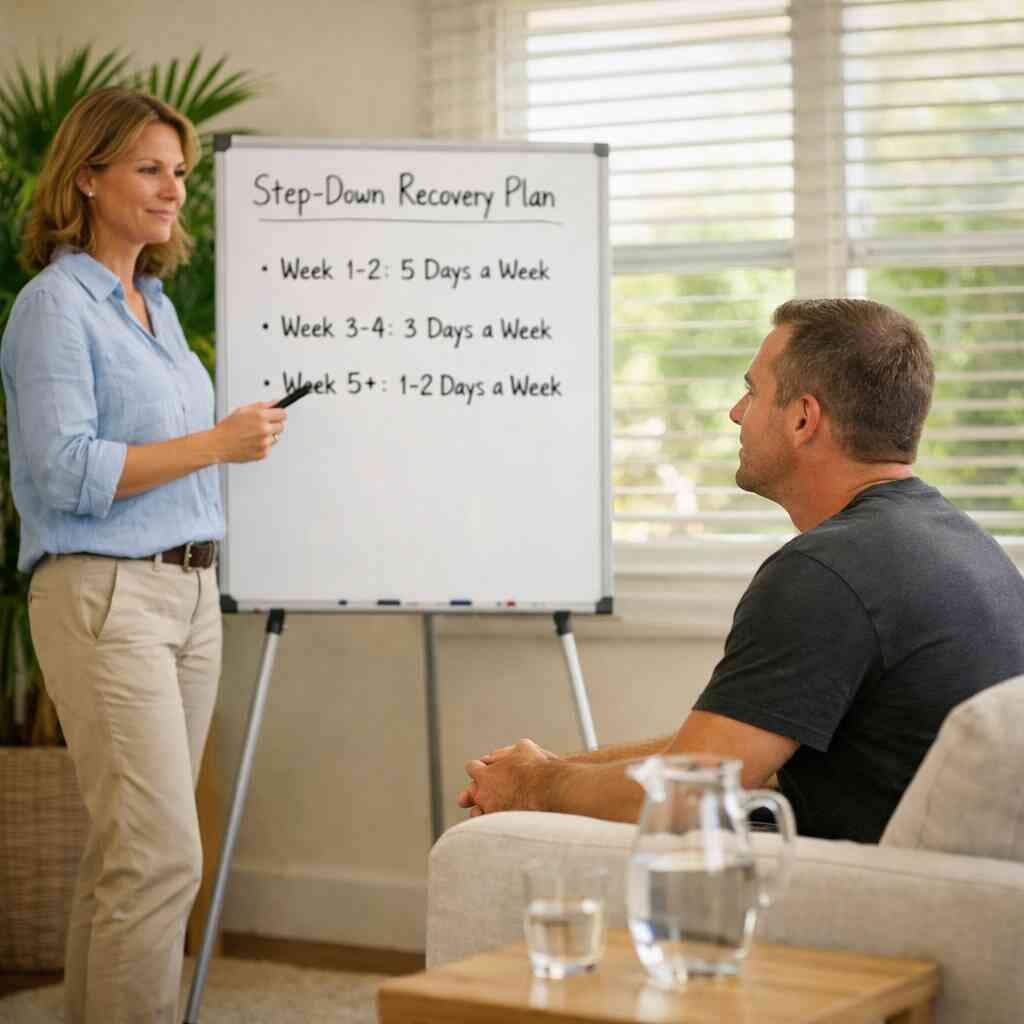
Private rehab can offer more comfort, but comfort alone is not the main issue. You want clinical depth, monitoring, and follow-through. If you are comparing facilities in Boca Raton, Fort Lauderdale, or West Palm Beach, ask how they manage co-occurring disorders, family involvement, and step-down care. For some families, that question changes everything.
What safe next steps look like after detox so recovery does not stall in Palm Beach County
Why aftercare planning, case management, and relapse prevention matter more than willpower alone
Detox can lower immediate risk. It does not teach people how to live differently. That is why aftercare planning and relapse prevention matter so much. Good planning covers triggers, housing, work stress, family patterns, and what to do when cravings spike.
A case manager can help translate treatment into daily life. That may include appointments, transportation, and referrals. In our experience, the biggest mistake is treating discharge like the finish line. Recovery needs a map.
How outpatient program Delray Beach, mental health IOP, partial hospitalization program, and intensive outpatient differ when life starts moving again
As life starts moving again, you need a level of care that fits real demands. An outpatient program Delray Beach may work for people with mild symptoms and strong support. A partial hospitalization program gives more structure and more hours. An intensive outpatient program offers a middle ground for people balancing work or family.
A simple way to think about it:
- PHP: more clinical time, less independence
- IOP: more flexibility, still strong support
- Standard outpatient: lighter touch, best after stability improves
If you are asking what is the difference between PHP and IOP, the answer depends on how much structure you still need. The goal is not to do less. The goal is to do enough.
What sober living resources, life skills training, vocational support, nutritional counseling, and family weekend can add to long term recovery
Sober living resources help people keep structure when home is not stable enough yet. Life skills training can cover simple but crucial things, like cooking, budgeting, and sleeping on a schedule. Vocational support helps people return to work without falling apart under pressure. Nutritional counseling matters too, because stimulant use often disrupts appetite and energy.
Family weekend can also change the tone. It gives relatives a way to learn boundaries, communication, and realistic expectations. If family therapy is part of the plan, ask how it connects to discharge and sober living resources. That connection often improves follow-through.
How alumni program support, RECO Intensive alumni connections, and sober things to do Delray can strengthen a coastal healing environment
Delray Beach has a real recovery culture. That matters. A supportive Delray Beach recovery community and alumni support can reduce the loneliness that often follows treatment. Alumni support is not just social. It is a reminder of what steady living looks like.
On a practical level, sober things to do Delray can include beach walks, coffee meetups, fitness groups, and meetings near Atlantic Avenue. A coastal healing environment is not magic. Still, sunlight, routine, and peer contact can make hard weeks feel more manageable. That is especially true for young adult rehab, professional program needs, LGBTQ+ affirmative treatment, veterans addiction help, gender-specific treatment, women’s rehab, and men’s recovery support.
How to choose a rehab in South Florida by comparing insurance options like Aetna, Cigna, Blue Cross Blue Shield, out-of-network benefits, and self-pay options
Choosing a rehab should feel informed, not rushed. Start by asking about Aetna, Cigna, and Blue Cross Blue Shield. Then ask whether the program accepts out-of-network benefits or only self-pay options. Cost matters, but so does fit.
A short checklist helps:
- Ask what level of care they recommend.
- Confirm insurance verification before admission.
- Ask how they treat dual diagnosis.
- Ask how family, alumni, and aftercare are handled.
- Ask what happens if detox is not enough.
If you want how to choose a Florida addiction treatment center, focus on the questions above. Good programs welcome them. Weak programs dodge them.
What to ask before you call RECO Intensive at 140 NE 4th Avenue, Delray Beach, FL 33483 for cocaine detox Florida support
Before you call, write down three things: current substance use, biggest safety concern, and insurance details. Then ask how the Delray Beach rehab for addiction treatment team would assess your situation. If you are near South Florida, ask about transportation, intake timing, and what support is available after detox. Clear answers help people act.
You may also ask how the program handles cocaine detox Florida when trauma, depression, or opioid use are also present. Ask about family therapy, sober living resources, and step-down care. If the answers feel rushed, keep looking. If they feel calm and specific, you may be in the right place.
Frequently Asked Questions
Question: Can RECO Health help with cocaine detox Florida if I’m also dealing with anxiety treatment, depression and addiction, or PTSD treatment?
Answer: Yes, RECO Health can be a strong fit when cocaine use is happening alongside mental health concerns. The blog content on Can RECO Health Help with Cocaine Detox in Florida 2026 explains why co-occurring disorders often need integrated care, not separate or delayed treatment. If cocaine use is connected to anxiety treatment needs, depression and addiction, trauma therapy South Florida, or bipolar disorder therapy, a dual diagnosis treatment approach can help the clinical team look at the full picture. That may include medical screening, evidence-based treatment, and support from licensed clinicians who understand how substance use and mental health symptoms interact. For many people, that kind of coordination is more helpful than trying to manage the crash at home and hoping it passes.
Question: What does the intake process look like at a Delray Beach rehab for cocaine detox Florida, and can you help with insurance verification?
Answer: The intake process should start with a careful clinical conversation, not pressure. At RECO Health, the goal is to understand recent cocaine use, sleep changes, mental health symptoms, other substances involved, and any safety concerns that could affect the level of care. The blog also highlights insurance verification early in the process so people are not left guessing about Aetna, Cigna, Blue Cross Blue Shield, out-of-network benefits, or self-pay options. That matters because financial clarity can help people move faster when they are scared or overwhelmed. If you are searching for a Delray Beach rehab or Florida addiction treatment option, asking about admission steps, timing, and coverage is one of the smartest first moves you can make.
Question: Can RECO Health support people who need South Florida detox after cocaine use and also have opioid rehab Delray, fentanyl treatment, heroin recovery, or prescription pill addiction concerns?
Answer: Yes, that kind of mixed-substance picture is exactly why a broader care plan matters. Cocaine use is often more complex when it overlaps with opioid rehab Delray needs, fentanyl treatment, heroin recovery, prescription pill addiction, or even benzodiazepine withdrawal. In those situations, a medical detox setting, careful screening, and a step-down plan can help reduce risk and avoid gaps in care. The blog explains that medication-assisted treatment, including Suboxone maintenance or Vivitrol injections, may matter when opioid use is also present, even though there is no direct medication that cures cocaine use disorder itself. RECO Health’s continuum can be helpful because it connects South Florida detox, residential treatment facility support, partial hospitalization program care, intensive outpatient, and aftercare planning instead of treating detox as the end of the story.
Question: What is the difference between PHP vs IOP at an outpatient program Delray Beach, and how do I know what level of care I need?
Answer: PHP, or partial hospitalization program, offers more daily structure and more therapy hours. IOP, or intensive outpatient, gives more flexibility while still providing strong support and accountability. The right choice depends on how stable things are right now. If someone is still dealing with a major cocaine crash, sleep loss, panic, or relapse risk, PHP may be a better fit. If they are more stable and ready to balance treatment with work, family, or school, intensive outpatient may make more sense. The blog on Can RECO Health Help with Cocaine Detox in Florida 2026 emphasizes that the goal is not to do less care, but the right amount of care. That is especially important for people searching for outpatient program Delray Beach support, mental health IOP, or a step-down from a residential treatment facility.
Question: Does RECO Health offer evidence-based treatment, family therapy, and holistic recovery supports like CBT, DBT, EMDR trauma therapy, yoga therapy, or art therapy?
Answer: RECO Health’s approach, as described in the content, is built around evidence-based treatment and a continuum of care that can include individual, group, and family-based support. For cocaine detox Florida and long-term recovery, tools like cognitive behavioral therapy, dialectical behavior therapy, and EMDR trauma therapy can be important when thoughts, emotions, and trauma are driving substance use. The blog also notes that group therapy activities, family therapy, mindfulness meditation, yoga therapy, and art therapy can support holistic recovery, especially when shame or isolation have made things harder. These services do not replace clinical care, but they can make treatment more sustainable and human. That combination is often what people look for in private rehab, particularly when they want a compassionate, structured path toward long-term recovery.
Question: How can RECO Health help me choose a rehab in South Florida, and do you support young adult rehab, professional’s program needs, LGBTQ+ affirmative treatment, or veterans addiction help?
Answer: Choosing a rehab starts with asking the right questions about fit, safety, and follow-through. The blog recommends looking at insurance verification, dual diagnosis treatment, aftercare support, relapse prevention, and how a program handles step-down care. RECO Health may be a good option for people comparing Delray Beach rehab choices, Florida recovery resources, or Palm Beach County treatment centers because the content points to a whole continuum that can include detox, residential care, partial hospitalization program support, intensive outpatient, sober living resources, and aftercare planning. If someone needs young adult rehab, professional’s program support, LGBTQ+ affirmative treatment, veterans addiction help, gender-specific treatment, women’s rehab, or men’s recovery support, it is important to ask how those needs are addressed in daily programming. The best rehab is the one that can meet the person where they are and provide structure without losing compassion.