
How RECO Health Explains Dual Diagnosis Treatment in Florida
Why a mental health crisis and a relapse often show up as the same problem You may be facing a situation that feels messy and hard to label. Maybe sleep has fallen apart, panic is rising, and drinking or using is getting worse. That combination can feel like two problems, but it often behaves like […]

Why a mental health crisis and a relapse often show up as the same problem
You may be facing a situation that feels messy and hard to label. Maybe sleep has fallen apart, panic is rising, and drinking or using is getting worse. That combination can feel like two problems, but it often behaves like one. In Delray Beach rehab settings, that is exactly why dual diagnosis treatment matters so much. It treats mental health and addiction treatment together, not in separate silos.
How depression and addiction can hide inside each other until daily life starts unraveling
Depression and addiction often wear the same clothes. You see isolation, low energy, missed work, irritability, and shame. A person may say they are just stressed, while alcohol or pills quietly become the coping plan. That is how depression and addiction can feed each other for months before anyone names it. If you want a starting point, depression and addiction recovery support can help clarify what you are seeing.
Here is the part most families miss: someone can look “functional” and still be sliding fast. They may still answer texts, still show up late, still keep the job, and still be in crisis. In South Florida recovery communities, we hear this almost every week. What looks like burnout may actually be a sign of addiction and a reason to get help, especially when mood changes and substance use rise together.
Why anxiety treatment and substance use care need to happen at the same time
Anxiety can make substance use feel like relief. Substance use can make anxiety worse the next day. That loop is powerful, and it does not break easily when only one side gets attention. The co-occurring disorders model, used widely in modern care, recognizes that anxiety treatment and substance use support should move together. For a deeper look at that overlap, anxiety treatment with substance use support explains the clinical link clearly.
One client in Palm Beach County described it plainly. He said his chest felt tight all day, so he drank at night to “turn off” his body. By the time he reached treatment, the anxiety was worse, the drinking was heavier, and sleep was almost gone. Once both issues were addressed at the same time, he could finally tell which symptoms belonged to withdrawal, which belonged to panic, and which belonged to both. That distinction matters.
What families in Delray Beach often miss when the signs of addiction look like stress or burnout
Families in Delray Beach often wait too long because the story sounds ordinary: work stress, parenting stress, grief, or a rough patch. Those can be real, of course, but they can also cover active use or a worsening mood disorder. On Atlantic Avenue, life moves fast, and people hide a lot behind a busy schedule. That is why local families need to watch for patterns, not excuses.
A few warning signs tend to repeat:
- More secrecy around time, money, or phone use
- Sleep changes that do not improve
- Mood swings that feel bigger than the situation
- Missing work, school, or family events
- New or worsening use of alcohol, pills, or stimulants
If those signs sound familiar, a calm clinical review helps. The goal is not to blame. It is to understand what is driving the spiral and what level of care makes sense.
What dual diagnosis treatment in Florida actually looks like once the door opens
A lot of people imagine treatment starts with a lecture. It usually does not. Good care starts with questions, listening, and careful sorting. At RECO Health, dual diagnosis treatment in Florida should mean the team looks at substance use, emotional health, safety, and daily function together. That is how a real plan begins.
How a co-occurring disorders assessment connects the medical and emotional picture
A co-occurring disorders assessment looks at both sides of the problem. The team asks about drugs or alcohol, yes, but also mood, sleep, trauma, panic, and medical history. NIDA and SAMHSA both support this integrated model because symptoms often overlap. Withdrawal can look like anxiety. Trauma can look like relapse. Depression can look like apathy after detox. If the picture is unclear, a careful assessment is the only honest place to start.
What online guides rarely mention is how relieving this can feel. People often arrive thinking they need to “prove” they deserve help. Instead, a good assessment removes that burden. It turns a vague crisis into a clinical map. That map can guide Florida addiction treatment options with more precision and less guesswork.
Why licensed clinicians look at trauma therapy South Florida needs, not just drug use
A lot of substance use has roots in pain. Sometimes that pain is obvious. Sometimes it is buried under years of coping. That is why licensed clinicians should screen for trauma, grief, abuse, and chronic stress. In South Florida, trauma often sits beneath the addiction story, even when the person has never named it out loud.
If trauma is part of the picture, trauma therapy South Florida services may matter as much as detox or relapse prevention. Evidence-based care often includes EMDR, CBT, and support for nervous system regulation. That matters for PTSD treatment, and it also matters for people with anxiety treatment or mood instability. A clinical plan that ignores trauma can feel incomplete very quickly.
What the intake process at a Delray Beach rehab should clarify before treatment begins
A proper intake process should not feel rushed. It should clarify what substances are involved, how often use happens, what symptoms show up when use stops, and whether medical risks are present. It should also ask about housing, transportation, work, legal stress, family support, and safety concerns. At a Delray Beach rehab, those details shape the level of care.
If you are comparing programs, ask direct questions:
- What level of care do you recommend first?
- Do you offer South Florida detox if withdrawal risk is high?
- How do you handle mental health symptoms during intake?
- What happens if I need a more structured setting?
- How do you coordinate follow-up care?
For many families, this conversation is the point where fear starts to shrink. That is a good sign. It means the process is becoming concrete.
When medication-assisted treatment like Suboxone maintenance or Vivitrol injections may be part of care
Medication can be part of recovery, especially for opioid use disorder or alcohol use disorder. Medication-assisted treatment may include Suboxone maintenance for opioid dependence or Vivitrol injections for alcohol or opioid relapse prevention, when clinically appropriate. These are FDA-approved tools, not shortcuts. They work best when paired with counseling, monitoring, and skill-building.
For someone in opioid rehab Delray care, medication can reduce cravings and help stabilize the day. For someone facing fentanyl treatment, heroin recovery, or prescription pill addiction, that stability can be critical. The right medication decision depends on history, medical status, and patient preference. It should never be automatic, and it should never be dismissed.
The care map that changes based on how unstable life feels right now
No two people need the same structure. That is the honest answer. Some need safe detox and around-the-clock support. Others can step into outpatient care quickly. The question is not what sounds ideal. The question is what keeps you medically and emotionally steady enough to do the work.
When South Florida detox comes first and how long detox is usually discussed with a care team
If withdrawal risk is high, detox comes first. That is especially true with alcohol, benzodiazepines, opioids, or heavy stimulant use. South Florida detox helps manage symptoms while the body clears substances. For a general overview, medical detox and how long detox may take explains the basics in plain language.
People always ask how long detox lasts. The real answer is that it depends on the substance, amount, history, and medical risk. Alcohol and benzodiazepine withdrawal can be dangerous without close oversight. Opioid withdrawal is rarely life-threatening, but it can be brutal and destabilizing. A care team should explain what to expect before you start.
Why a residential treatment facility may fit better than a partial hospitalization program for some people
A residential treatment facility offers more structure. That matters when home is chaotic, cravings are strong, or mental health symptoms are severe. A partial hospitalization program can still be a strong option, but it assumes more stability outside treatment hours. The right setting depends on how much support you need to stay safe and engaged.
If you are comparing residential treatment and outpatient care, think in terms of pressure. How much pressure is coming from work, family, substance use, or mood symptoms? If the answer is “a lot,” residential care may fit better. If the answer is “some, but manageable,” PHP or outpatient may be enough to start.
How PHP vs IOP changes structure, freedom, and support in an outpatient program Delray Beach patients can follow
The difference between PHP vs IOP is mostly intensity and time. PHP usually gives more hours, more structure, and more daily support. Intensive outpatient care, or IOP, gives more flexibility while still offering therapy and accountability. In an outpatient program Delray Beach residents can use, that difference affects work schedules, family duties, and transportation.
A quick comparison helps:
Level of careTypical feelBest forPHPHighly structured, daytime supportPeople needing close monitoringIOPFlexible, still accountablePeople with some stabilityStandard outpatientLower intensity, maintenance-focusedPeople in later recoveryIf you want a clear breakdown, PHP versus IOP in Delray Beach can help you compare structure without the jargon.
What mental health IOP can offer for bipolar disorder therapy, PTSD treatment, and depression and addiction
A strong mental health IOP can support people with mood disorders and substance use at the same time. That matters for bipolar disorder therapy, PTSD treatment, and depression and addiction patterns that keep cycling. It also helps when someone is sober enough for outpatient care but still needs frequent clinical contact.
In practice, IOP gives space to practice new skills between sessions. That space can be uncomfortable at first. It can also be the place where real change sticks. Learning coping skills takes repetition, not inspiration.
How evidence-based treatment blends CBT, DBT, EMDR trauma therapy, group therapy activities, and family therapy
Evidence-based care means the treatment has research support. Cognitive behavioral therapy helps people spot thought patterns that trigger use. Dialectical behavior therapy teaches distress tolerance, emotion regulation, and interpersonal skills. EMDR trauma therapy can help process traumatic memories when appropriate. Group therapy activities and family therapy add practice, feedback, and accountability. 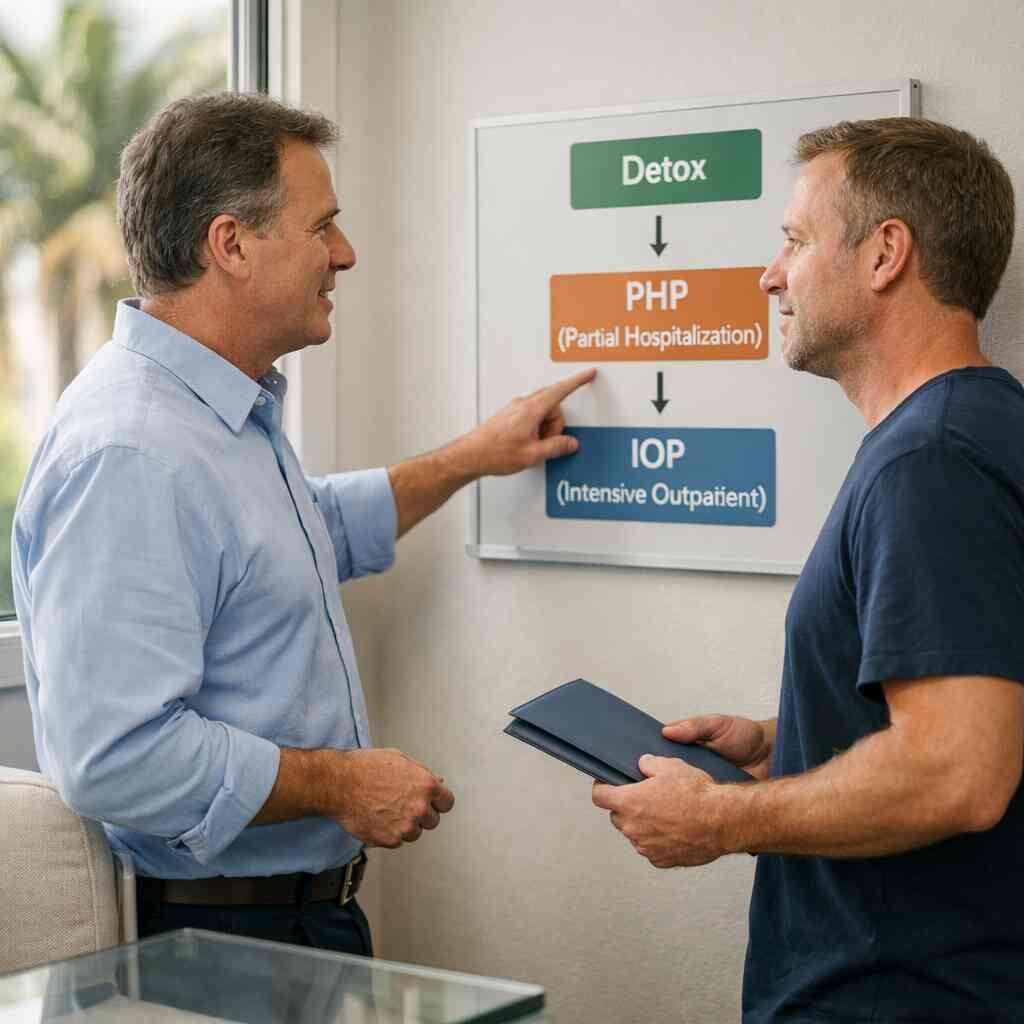
One person in Broward County said group was the first place he heard his thoughts out loud and realized how distorted they sounded. That kind of moment is hard, but it matters. Family therapy can also change the home climate quickly. It helps relatives stop chasing symptoms and start responding to patterns.
The practical details that decide whether treatment is possible or just a good idea
Great clinical care still has to fit real life. Insurance, housing, work, and cost all matter. If those details are ignored, people delay care or drop out early. That is why the practical side deserves as much attention as the therapy model.
How insurance verification works for Florida rehabs that take insurance and out-of-network benefits
Before admission, a program should check benefits clearly. Insurance verification can show whether your plan includes behavioral health, what your deductible is, and whether out-of-network benefits may help. For families searching for insurance verification for Florida rehab, the goal is simple: no surprises when treatment begins.
If you have Aetna, Cigna, or Blue Cross Blue Shield, ask how the claim process works. Ask what part of care may be covered and what may not. Also ask for written estimates when possible. That conversation is not rude. It is smart.
When self-pay options make sense and what to ask about before choosing private rehab
Sometimes self-pay options make sense, especially if coverage is limited or the best clinical fit is outside the network. Private rehab can offer privacy and flexibility, but the quality still varies. Ask about clinical staffing, therapy frequency, discharge planning, and family involvement. If the answers are vague, keep looking.
A few good questions:
- What is included in the daily rate?
- Are psychiatric services available?
- How are medication needs managed?
- Is there support for co-occurring disorders?
- What happens after discharge?
If you are comparing out-of-network benefits for Palm Beach rehab, remember that “private” should never mean unaccountable. Quality should still be visible.
Why case management, life skills training, nutritional counseling, and sober living resources affect long-term recovery
Recovery does not live only in therapy. It lives in calendars, meals, rides, sleep, and housing. That is why case management, life skills training, nutritional counseling, and sober living resources matter. They help people practice stability instead of just talking about it.
The plans that last are rarely flashy. They are basic. They are also powerful. A person who can cook, sleep, get to work, and live in safer housing has a better platform for long-term recovery.
How aftercare planning, relapse prevention, and an alumni program support the next phase after discharge
Discharge should not feel like a cliff. Good programs build aftercare planning before the last week arrives. That may include therapy referrals, medication follow-up, support groups, and housing steps. Relapse prevention then turns those plans into habits. An alumni program can keep people connected when the structure gets lighter.
For continued support, aftercare planning and alumni support can be the difference between drift and direction. Alumni support is not about nostalgia. It is about continuity. Recovery often needs repeated contact, not a one-time sendoff.
What matters most when comparing opioid rehab Delray options, cocaine detox Florida programs, and alcohol addiction treatment centers
Different substances bring different risks. Cocaine detox Florida care may focus on mood crashes, sleep, and agitation. Alcoholism treatment center services must watch for withdrawal risk and liver issues. Opioid rehab Delray programs should be ready for cravings, overdose risk, and medication questions. Benzodiazepine withdrawal deserves especially careful medical oversight.
Compare programs on these points:
- Medical supervision
- Dual diagnosis capability
- Therapy mix
- Discharge planning
- Family support
- Medication options
If you are searching “drug rehab near me,” that phrase is useful only if the program also fits your clinical needs. Proximity helps. Proper care matters more.
What a steady next move looks like when the goal is lasting stability
The best next move is usually not the fanciest one. It is the one that fits your level of risk, your home life, and your willingness to participate. That means slowing down enough to choose carefully, even if you feel pressure to decide today. In Delray Beach, that can mean balancing urgency with fit.
How to choose a rehab without getting lost in marketing language or RECO Intensive reviews alone
Reviews can help, but they cannot tell the whole story. RECO Intensive reviews may reflect someone else’s fit, not yours. When people ask how to choose a rehab, the real question is whether the program can handle your symptoms, your substance pattern, and your support needs. How to choose a Florida addiction treatment center is a strong place to sort the basics.
Look past slogans. Ask about clinical depth, safety, and continuity. If a program talks only about comfort, keep asking. Comfort matters, but it cannot replace treatment.
Why family weekend, intervention services, and family therapy can shift the whole recovery plan
Families often feel helpless by the time they reach out. That is normal. Intervention services can help when the conversation keeps going nowhere. Family weekend and family therapy can reduce blame, improve communication, and set clearer boundaries. That support often changes the home environment faster than anyone expects.
If the household has been centered around crisis, these services help reset the pattern. They do not fix everything at once. They do, however, make recovery less fragile. Family therapy is often where that shift becomes visible.
Where dual diagnosis treatment fits for young adult rehab, veterans addiction help, LGBTQ+ affirmative treatment, and gender-specific treatment
Dual diagnosis care should adapt to the person, not force the person to adapt to the program. That matters for young adult rehab, veterans addiction help, LGBTQ+ affirmative treatment, and gender-specific treatment. A person’s identity, trauma history, and life stage all affect treatment engagement. Good programs respect that.
Some people do better in women’s rehab settings. Others need men’s recovery groups that address shame, anger, and responsibility directly. The right fit can lower resistance and improve honesty. That is clinically useful, not just culturally sensitive.
How to use the Delray Beach recovery community, coastal healing environment, and sober things to do Delray as part of recovery maintenance
Delray Beach has a real recovery rhythm. The Delray Beach recovery community offers meetings, peer support, and routines that can anchor early sobriety. The coastal healing environment helps too, though it is not magic. A walk near the beach, a quiet morning, or a simple coffee after a meeting can support steadier habits. If you need ideas, sober things to do in Delray Beach can offer useful local context.
You can also build a simple list of sober things to do Delray:
- Morning meetings
- Beach walks
- Bookstore stops
- Coffee with sober friends
- Volunteer work
- Fitness classes
These are not distractions. They are recovery scaffolding.
What to ask during a call about RECO Intensive location at 140 NE 4th Avenue Delray Beach FL 33483 and the right level of care
If you call about the RECO Intensive location at 140 NE 4th Avenue Delray Beach FL 33483, ask what level of care they recommend and why. Ask whether they can help with detox, residential care, PHP, or IOP. Ask how they handle co-occurring disorders, family involvement, and step-down planning. Also ask about Florida rehabs that take insurance and whether self-pay options are available.
A few final questions can keep the call focused:
- Do you treat both mental health and addiction together?
- What happens if I need a higher or lower level of care?
- How do you support aftercare?
- What should I bring?
- How soon can intake happen?
You do not have to solve everything today. Start with one call, one honest conversation, and one clear question about what level of care actually fits.
*”I feel like RECO treatment is one of the best in Florida. I have been to several treatment centers and RECO is definitely better in almost every area. I can honesty say all the employees genuinely care. They go out of their way to help us navigate through early recovery The group facilitators are the best I’ve seen in treatment. Ms Engrid, Ms V and Rabbi Mark are unbelievable. Rabbi really breaks down the science behind the disease while Ms Engrid keeps it real with us and is always reminding us that we can make it. She really brings a lot of good energy around the NA program. Ms V comes in and she a wonderful therapist who really understands things from the family side. She really helps me understand what our families are going through. Hands down, RECO has the best group facilitators I’ve ever seen . I know of some peers that feel the same way
Brock really does a great job with the alumni department. As I am writing this, I am at a talent show put on by RECO. There are around 75 people here all having a great time sober. The entire event was put on well. Clients/ alumni made dishes and everyone is enjoying dinner while watching some amazing talent. I’m including pics from tonight. While going through some of my own struggles, I could really feel RECO’s support throughout the community. Brock was in contact with me on a daily basis just letting me know RECO was there for me. The support was overwhelming.
Led by Carly, The behavioral techs are fantastic. We spend a lot of time with the techs as they are always hanging with us at our houses outside of groups. They genuinely love their jobs and you can see it. The techs are fantastic in letting us know they are here for us and they show support in any way they can even if it’s just to listen to us vent about something we are struggling with. Brandon, Becky, Carlos and Brian especially go out of their way to help things go smoothly.
On the therapy side, they are also great. The clinical director, David, has been doing this a long time and he gets exactly what we are going through. You can see how passionate he is about his work when he runs group. There is a healthy balance with the entire team and I can see how much time they spend discussing clients. They know everything about us and I feel like that really helps us build a healthy relationship with our therapist. The medical staff is also great. Led by Kathaleen, the entire staff is always on point. Viviana, Kathaleen’s right hand lady, works her tail off making sure everything runs smoothly on the medical side.”- Buck F., a 5 star review from our business on Google Business Reviews
If you’re ready, reach out to a team that can explain the next steps plainly and help you verify benefits before you commit.
Frequently Asked Questions
How long does detox last at a Delray Beach rehab?
Detox length depends on the substance, amount used, and medical history. Alcohol and benzodiazepine withdrawal can require closer monitoring than some other substances. Opioid withdrawal may peak quickly but still need support. A clinical team should explain the likely range after assessment.
What is the difference between PHP and IOP?
PHP gives more structure and more hours per week. IOP is less intensive and allows more flexibility for work, family, or school. Both can support mental health and addiction treatment. The right choice depends on stability, safety, and symptoms.
Does RECO Health offer dual diagnosis treatment?
RECO Health describes a continuum that includes mental health and addiction treatment, which aligns with dual diagnosis care. The best way to confirm fit is to ask how they assess co-occurring disorders, trauma, and medication needs during intake.
Can medication like Suboxone or Vivitrol be part of treatment?
Yes, when clinically appropriate. Suboxone is often used for opioid use disorder. Vivitrol may help with alcohol or opioid relapse prevention. A clinician should review your medical history and goals before recommending either option.
Is family involved in treatment?
Many programs include family therapy or family education because addiction affects the whole household. Family support can improve communication and relapse planning. Ask how often family sessions happen and whether loved ones can join by phone or in person.
How do I know if I need residential care or outpatient care?
If withdrawal risk, cravings, unsafe housing, or severe symptoms are present, residential or detox may fit better. If you have more stability and support at home, PHP or IOP may be enough. A good intake process should match the level of care to your real situation.