
What Is Mental Health IOP and Who Benefits Most
When outpatient care is the missing middle between crisis and stability If you are reading this while feeling worn down, scared, or stuck, that makes sense. Mental health care can feel confusing, especially when weekly therapy is not enough and a hospital stay feels like too much. A mental health IOP, or intensive outpatient program […]

When outpatient care is the missing middle between crisis and stability
If you are reading this while feeling worn down, scared, or stuck, that makes sense. Mental health care can feel confusing, especially when weekly therapy is not enough and a hospital stay feels like too much. A mental health IOP, or intensive outpatient program for mental health, often fills that gap. It provides structure without removing you from daily life.
What mental health IOP actually looks like when you need more support than weekly therapy can give
A mental health IOP usually offers several therapy sessions each week. You still sleep at home, keep some routines, and practice skills in real life. That matters when you need more than an hour of support, but do not need 24-hour supervision. Many people searching for mental health intensive outpatient program in Delray Beach are really asking for this middle path.
In practical terms, IOP often includes individual therapy, group therapy, and care coordination. It may also include psychiatric check-ins, family support, and discharge planning. Here is the part most families miss: consistency matters more than intensity alone. If you can keep showing up, you can often build momentum.
Why a partial hospitalization program can feel too intense for some people and too light for others
A partial hospitalization program, or PHP, usually requires more daytime hours than IOP. That can help during a sharp crisis. It can also feel hard if you are trying to work, parent, or keep a school schedule. If you are comparing PHP vs IOP in Palm Beach County, the real question is not which sounds stronger. It is which level matches your current stability.
PHP can be the right fit when symptoms are high and safety needs are active. IOP can be better when you need structure, but not all-day care. One client in South Florida described it simply: mornings at PHP felt like too much, but weekly therapy felt like too little. IOP became the steadier bridge.
How mental health IOP fits after residential treatment or medical detox without losing momentum
IOP often works well after a residential treatment stay or medical detox. That transition can feel fragile. People leave a protected setting and suddenly face traffic, errands, family tension, and too much quiet. Without a plan, the old patterns rush back in.
A strong outpatient program helps you keep building skills while life resumes. It can support mental health care after residential treatment and after South Florida detox. For people also dealing with substance use, IOP may follow cocaine detox Florida, opioid rehab Delray, or benzodiazepine withdrawal care. The goal is simple: do not let the gap get too wide.
Which signs suggest outpatient mental health treatment may be enough if home life is steady
Outpatient mental health treatment may fit if you can stay safe, follow a routine, and attend regularly. It often works best when home life is steady enough to support recovery. Signs can include missing work because of symptoms, avoiding people, or feeling overwhelmed by small tasks. Those are not failures. They are clues.
You may be a good outpatient candidate if you can manage sleep, eating, and basic responsibilities with support. You may also need help for signs of addiction, depression, or anxiety symptoms without hospitalization. If your life is held together but strained, outpatient care can protect what is working. That is often enough to change direction.
Why Delray Beach and the South Florida recovery community matter when consistency is the goal
Place matters more than many people expect. Delray Beach recovery community resources can support consistency through sober things to do in Delray Beach, peer support, and a familiar recovery rhythm. The area near Atlantic Avenue, the beach, and quieter parts of Palm Beach County offers both movement and calm. That mix can help people stay engaged without feeling trapped.
At RECO Health, the local setting supports care that feels grounded and accessible. The outpatient mental health treatment in Delray Beach model also helps people who need regular follow-through. In South Florida, recovery often happens in layers: treatment, housing, support, and community. That is not extra. It is the structure many people need.
“The team at Reco Health is incredibly professional, compassionate, and dedicated to providing comprehensive care. Their approach to substance abuse and mental health is holistic and personalized, ensuring that each client receives the support they need. I highly recommend Reco Health for anyone seeking quality addiction treatment and mental health services in Delray Beach Florida.”– Salvatore A., a 5 star review from our business on Google Business Reviews
Who benefits most from a mental health IOP and who usually needs a different level of care
Mental health IOP is not one-size-fits-all. Some people need it because symptoms are serious but manageable. Others need a different level of care because safety, withdrawal, or severe instability is still active. The best match depends on symptoms, home support, and whether substance use is part of the picture. That is where an honest assessment matters.
How depression and addiction can make each other worse in co-occurring disorders
Depression and addiction often reinforce each other. When mood drops, substances can look like relief. Then substance use deepens hopelessness, shame, and isolation. That cycle is why dual diagnosis treatment for co-occurring disorders matters so much.
NIDA and SAMHSA both support treating co-occurring disorders together, not separately. A person may need depression and addiction recovery support while also addressing cravings and triggers. In a Delray Beach rehab setting, this often means combining therapy, medication review, and relapse prevention. The question is not which problem came first. It is how they keep feeding each other now.
When anxiety treatment needs structure because work, school, or parenting keep getting derailed
Anxiety can become a daily interruption instead of a passing feeling. You may miss meetings, avoid emails, or feel frozen before school drop-off. That is often when anxiety treatment with structured outpatient care helps. Structure gives the nervous system repeatable cues that life is safe enough to practice.
If you have support at home but still cannot function well, IOP may help more than weekly care. This is common in professional programs, young adult rehab, and parenting stress. One young father told a clinician that he could “fake fine” at work, but he could not get through bedtime without panic. That kind of breakdown often means more structure, not more willpower.
Why bipolar disorder therapy often needs close monitoring plus coping skills practice
Bipolar disorder therapy often needs two things at once: monitoring and practice. Mood shifts can change quickly, and sleep changes matter a lot. IOP can help track warning signs while building daily habits that support stability. It may also help with medication follow-up when prescribed by a clinician.
The skill work matters because insight alone is not enough. People need tools for sleep routines, conflict, and stress. They also need a place to notice early signs before symptoms climb. That is where supportive outpatient care can be powerful.
How PTSD treatment and trauma therapy South Florida style care can help when memories keep hijacking daily life
PTSD can make the body feel unsafe long after the danger is over. Sounds, smells, and arguments can trigger intense reactions. Trauma therapy South Florida programs often pair safety skills with processing work. That combination matters because trauma recovery should never feel forced. 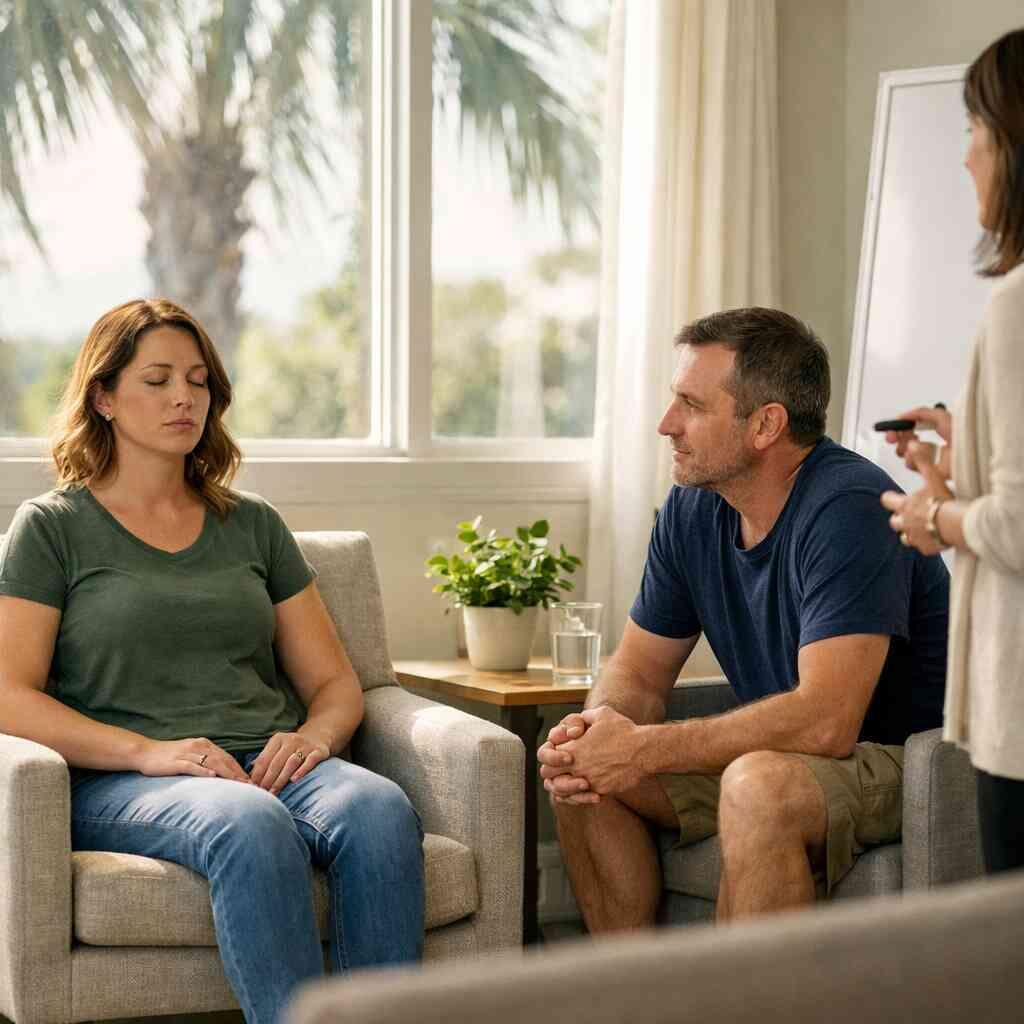
If memories are taking over your day, PTSD treatment and trauma therapy in South Florida may help you slow the system down. EMDR trauma therapy, CBT, and grounding skills can all have a place. What almost no online guide mentions is this: many people do better when trauma work starts only after basic safety is stronger. Pushing too fast can backfire.
What changes when a person needs medication-assisted treatment alongside therapy for opioid rehab Delray or prescription pill addiction
Some people need medication-assisted treatment, or MAT, alongside therapy. That can include FDA-approved options like Vivitrol injections or Suboxone maintenance when clinically appropriate. MAT can support opioid rehab Delray needs, heroin recovery, fentanyl treatment, and prescription pill addiction. It may also help reduce relapse risk while therapy builds new habits.
This does not replace counseling. It stabilizes the body so therapy can land. A person coming off fentanyl or managing opioid cravings may need careful medical oversight. The same is true for alcohol cravings in an alcoholism treatment center. If the body is still in distress, outpatient therapy alone may not be enough.
Why young adult rehab, professional support, LGBTQ plus affirmative care, veterans addiction help, and gender-specific treatment may change the fit
Fit matters. Young adult rehab often needs more skill-building around structure, identity, and independence. Professional program care may need privacy, schedule flexibility, and stress management. LGBTQ plus affirmative treatment and veterans addiction help also need providers who understand lived experience, not stereotypes.
Gender-specific treatment can feel safer for some people, especially in trauma recovery. Women’s rehab and men’s recovery tracks may help with trust, shame, and group openness. These are not marketing labels. They are care decisions. When treatment feels emotionally safe, people tend to stay.
The quiet mechanics of recovery that make IOP work after the crisis passes
IOP succeeds because it makes change repeatable. It turns insight into weekly practice. That may sound plain, but plain is often what works. The best programs use evidence-based treatment, licensed clinicians, and clear follow-through. Recovery grows in these repeated moments.
How cognitive behavioral therapy, dialectical behavior therapy, and EMDR trauma therapy show up in real sessions
CBT helps people notice thoughts that fuel panic, sadness, or urges. DBT helps with emotion regulation, distress tolerance, and relationships. EMDR trauma therapy can help process stored trauma memories without staying stuck in them. These therapies are common because the evidence base is strong.
A person in IOP might practice thought records, boundary work, or grounding between sessions. They might also review triggers from the week and plan for the next one. On our end, the question is always practical: what can you use tonight, not someday? That keeps therapy real.
Why group therapy activities, family therapy, and family weekend can strengthen aftercare planning
Group therapy activities give people a place to test new skills safely. Family therapy can reduce blame and improve communication at home. Family weekend, when offered, helps relatives understand the process and their role in it. That matters because recovery rarely happens in isolation.
The family therapy support during recovery model often helps families stop guessing. It also supports aftercare planning, which is the bridge between treatment and real life. One mother told a counselor she finally understood why “just be stronger” was not a plan. That insight changed the tone at home.
How mindfulness meditation, yoga therapy, art therapy, and nutritional counseling support holistic recovery without replacing clinical care
Holistic recovery can help, but it should never replace clinical care. Mindfulness meditation teaches the nervous system to pause. Yoga therapy can reconnect people with their bodies after stress or trauma. Art therapy can give shape to feelings that are hard to say out loud.
Nutritional counseling also matters more than many expect. Low blood sugar, dehydration, and poor sleep can make depression and anxiety worse. In outpatient care, these supports work best as add-ons, not substitutes. They help the person function while deeper healing continues.
What relapse prevention, coping skills, case management, and life skills training usually focus on week by week
Relapse prevention is about spotting patterns early. Coping skills help you respond before a crisis grows. Case management can help with appointments, housing, school, or work needs. Life skills training may cover routines, time management, and healthy structure.
These are the quiet tasks that keep recovery moving. The coping skills taught in group therapy often include urge surfing, boundary setting, and self-soothing. On a bad week, those may sound small. In real life, they can be the difference between a hard night and a relapse.
When medication-assisted treatment, Vivitrol injections, or Suboxone maintenance may be part of a stable plan
MAT can be part of a stable outpatient plan when substance use is part of the diagnosis. Vivitrol injections may help some people after alcohol or opioid treatment. Suboxone maintenance may help reduce cravings and stabilize recovery for others. The right choice depends on diagnosis, history, and medical guidance.
This is where careful coordination matters. A good program does not treat medication like a shortcut or a crutch. It treats it like a clinical tool. That tool may help a person stay present enough to do the harder work of change.
How to choose a rehab in Delray Beach, compare insurance verification and self-pay options, and decide what to do next with RECO Intensive location guidance and admissions support
Choosing a program can feel overwhelming, especially if you are comparing private rehab options. Start with what level of care fits your symptoms, then check access and support. Ask about insurance verification for Florida rehabs, out-of-network benefits, and self-pay options. If you need a place to start, how to verify insurance for RECO Health in Florida can clarify what your plan may cover.
Then look at location and continuity. RECO Intensive location at 140 NE 4th Avenue Delray Beach FL 33483 places care inside the South Florida recovery community. That can help if you want a beachside recovery setting with nearby support and a real outpatient rhythm. If you are comparing Delray Beach rehab options, ask how intake works, what aftercare support looks like, and whether alumni program access is part of the plan. You do not have to sort all of it out tonight. Start with one call and one honest conversation.
FAQ
How long does detox last at a Delray Beach rehab?
Detox length depends on the substance, medical history, and symptoms. Alcohol withdrawal, opioid withdrawal, cocaine detox Florida needs, and benzodiazepine withdrawal can all move differently. A clinician should assess you first. If you need medical detox, ask about monitoring, comfort support, and what happens after stabilization.
What is the difference between PHP and IOP?
PHP usually means more treatment hours per day and more structure. IOP gives strong support while letting you keep more of your home routine. The best choice depends on safety, symptoms, and daily responsibilities. If you are comparing both, ask how each program handles therapy, medication review, and discharge planning.
Can mental health IOP help if I do not have a substance use problem?
Yes. IOP can support depression, anxiety, bipolar disorder, PTSD, burnout, and overwhelm even without addiction. It is designed for people who need more than weekly therapy. A good program will tailor care to your diagnosis and functioning level. It should not force addiction-focused treatment if that is not your need.
Does family get involved in treatment?
Often, yes. Family therapy can improve communication, reduce conflict, and support aftercare planning. Some programs also offer family weekend or education sessions. Involving family is not about blame. It is about helping the home environment support recovery, especially after residential treatment or an outpatient transition.
How do I know if I need dual diagnosis treatment?
If mental health symptoms and substance use feed each other, dual diagnosis treatment may fit. Examples include depression and addiction, anxiety and drinking, or trauma and opioid use. A proper assessment should look at both conditions together. That approach aligns with NIDA and SAMHSA guidance for co-occurring disorders.
What should I ask during insurance verification?
Ask whether your plan covers mental health IOP, PHP, detox, and outpatient therapy. Also ask about deductibles, copays, out-of-network benefits, and prior authorization. If you have Aetna, Cigna, or Blue Cross Blue Shield, coverage can still vary by plan. Clear answers up front can prevent surprises later.
Where can I find RECO Intensive aftercare support and alumni help?
You can ask about aftercare planning and alumni support during admissions or intake. Aftercare may include outpatient follow-up, sober living resources, peer support, and alumni program connection. That ongoing support often helps people keep a steady rhythm after higher levels of care.