
TMS therapy for Lake Worth Beach — FDA-cleared TRD care, 22 minutes from home.
A specialist outpatient program for clients in Lake Worth Beach. PHP, IOP, in-house psychiatry, sober-living network, family programming. Same admissions team, 24/7.
Start the conversation Or call directly — (561) 464-4077Local options exist. This is the clinical specialist.
Lake Worth Beach clients reach RECO Health's Delray Beach TMS suite in twenty-two minutes via A1A — close enough to keep the six-week daily-session schedule sustainable without disrupting downtown work or family life. In-house psychiatry handles prior authorization, motor threshold mapping, and concurrent medication management under one roof, and the same team runs the iTBS three-minute protocol for clients whose schedule can't accommodate a longer chair time. Concurrent CBT or ACT with the outpatient team is available for clients who want combined-treatment durability rather than TMS monotherapy.
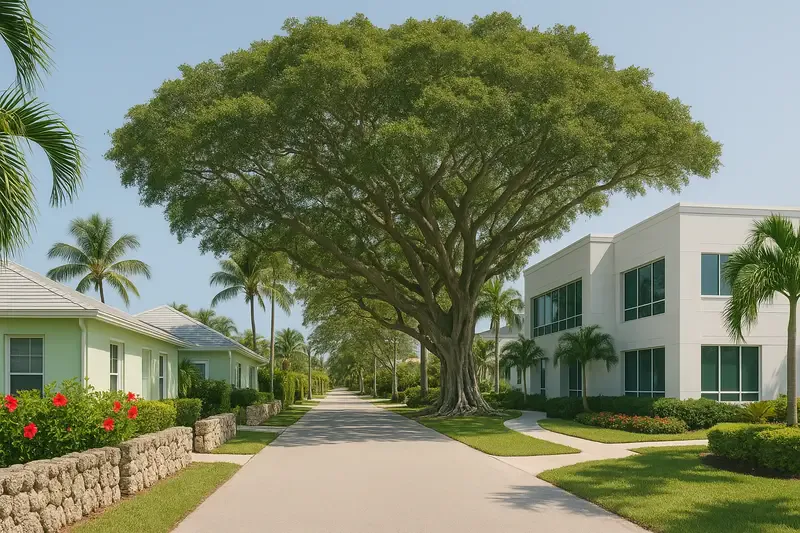
Lake Worth Beach sits fourteen miles up A1A from RECO Health’s Delray Beach campus — twenty-two minutes by car outside of season, closer to forty when the snowbirds are down. Clients from Bryant Park, College Park, Mango Groves, and Parrot Cove routinely commute five days a week for outpatient psychiatric care rather than uproot the life they’ve built around downtown Lake Worth. Transcranial magnetic stimulation, delivered in short daily sessions across a six-week course, is one of the treatments that fits that commute model without compromise.
Who is a candidate for rTMS
The FDA-cleared, insurance-covered indication for repetitive transcranial magnetic stimulation is major depressive disorder with documented failure of at least two adequate antidepressant trials. “Adequate” is a defined term: therapeutic dose, six to eight weeks of continuous exposure, and confirmed adherence. A patient who took sertraline 50 mg for three weeks and stopped does not meet criteria; a patient who completed a full course of escitalopram 20 mg and a full course of venlafaxine 225 mg with continued PHQ-9 scores above fifteen does. RECO’s psychiatry team documents the trial history in the format commercial carriers require and manages the prior authorization directly.
Clinical candidacy extends beyond payer criteria. Intake screening rules out implanted metallic devices within thirty centimeters of the treatment coil, prior seizure or significant traumatic brain injury, and unstable active substance use — TMS therapy is not appropriate during untreated benzodiazepine or alcohol withdrawal, and untreated stimulant use will confound response measurement. On the Deep TMS platform (H7 coil), the same evaluation extends to obsessive-compulsive disorder, using baseline YBOCS scores to establish severity and track change through the course.
The 36-session protocol and what it actually looks like
Session one is motor threshold mapping. A single-pulse stimulator is positioned over the primary motor cortex, and the clinician locates the minimum intensity that reliably produces a visible thumb twitch — the resting motor threshold. Treatment intensity is then set at 120% of that value, which is the parameter validated in the pivotal trials and required by most payers. The standard high-frequency protocol delivers 3000 pulses at 10 Hz over the left dorsolateral prefrontal cortex per session, in four-second trains separated by twenty-six seconds of rest.
Sessions two through thirty are daily, Monday through Friday, six weeks straight. Chair time runs twenty to forty minutes depending on the coil and protocol. The final six sessions are a taper — three per week for two weeks, then two, then one — to consolidate response and reduce early relapse. Clients drive themselves back to Lake Worth Beach the same day, return to work, and are not sedated at any point. The most common first-week side effect is mild scalp discomfort at the stimulation site; it typically resolves by session five as trigeminal fibers desensitize.
Response, remission, and the second-course question
Published response rates for rTMS in treatment-resistant depression range from forty to sixty percent, with remission — defined as a PHQ-9 below five or a Hamilton Depression Rating Scale below eight — running twenty-five to forty percent. These figures assume completion of the full thirty-six-session course; partial courses cannot be assumed to deliver proportional benefit. Response typically emerges between sessions fifteen and twenty-five, with continued gains through the taper phase. Weekly PHQ-9 and GAD-7 tracking flags trajectory early enough to change course when needed.
Non-responders at session twenty to twenty-five are re-evaluated rather than continued mechanically. Sometimes the coil position warrants adjustment based on updated targeting. Sometimes a switch to intermittent theta burst is warranted. Sometimes the presentation is better matched to the ketamine or intranasal esketamine pathway — particularly when suicidality is prominent, when the depressive episode carries strong anhedonic features, or when a two-week rather than six-week response window is clinically necessary. Responders who later relapse are candidates for a second full course, most commonly twelve to eighteen months after the first.
iTBS and the shorter-session option
Intermittent Theta Burst Stimulation is an FDA-cleared alternative rTMS protocol that delivers 600 pulses in bursts of three at 50 Hz, repeated every ten seconds — the entire treatment takes just over three minutes in the chair. The THREE-D non-inferiority trial demonstrated equivalent efficacy to the twenty-minute 10 Hz protocol at four weeks, and iTBS is now the standard-of-care alternative when scheduling requires it. For a Lake Worth Beach client with a fixed workday in West Palm or Boca, iTBS makes daily treatment feasible without sacrificing evidence base.
Not every commercial plan reimburses iTBS at the same CPT code or rate as the 10 Hz protocol. RECO’s admissions team confirms coverage before enrolling and, when necessary, files iTBS under the 90867/90868/90869 series with supporting documentation. Combined 10 Hz plus iTBS protocols and accelerated dosing schedules are available in research settings but are not offered as standard clinical care outside of trial contexts.
What to expect on your first visit
The first appointment is a psychiatric evaluation with a physician, not a technician-run intake. It runs sixty to ninety minutes and includes structured screening — PHQ-9 and GAD-7 at minimum, MDQ to rule out bipolar spectrum, ASRS if attention symptoms are prominent, and the Columbia Suicide Severity Rating Scale when clinically indicated. Medication reconciliation is comprehensive: current SSRI or SNRI dose, augmentation agents such as aripiprazole, lithium, or quetiapine, and any prior trials of bupropion or mirtazapine are documented against the payer’s step-therapy schedule.
Motor threshold mapping is scheduled as a separate visit once prior authorization clears, typically within seven to ten business days of the initial evaluation. Concurrent psychotherapy — most often CBT or ACT delivered by the outpatient team, with MI-informed engagement where ambivalence is a factor — is encouraged rather than paused during the treatment course. Available evidence favors combined pharmacologic, neuromodulation, and psychotherapy treatment over TMS monotherapy for durability of remission.
Insurance and admissions from Lake Worth Beach
RECO Health is in-network with Florida Blue, Aetna, Cigna, UnitedHealthcare, Humana, and BlueCross BlueShield plans. Coverage for rTMS under all six carriers requires documented failure of two adequate antidepressant trials from separate mechanistic classes, and most require an in-network psychiatric evaluation before authorization is granted. The admissions team collects prior records directly from previous prescribers rather than routing that burden through the patient.
The drive from Lake Worth Beach is straightforward. A1A south through Manalapan and Ocean Ridge is scenic and predictable outside of morning peak; I-95 south to Linton Boulevard is faster the rest of the day. Most clients settle into an early-morning standing slot to preserve the workday, and the six-week schedule allows a single recurring appointment rather than weekly rebooking. Parking is on-site at the Delray campus at no charge.
Serving residents of: Bryant Park, College Park, Mango Groves, Parrot Cove, downtown Lake Worth.
If it's any of these, we can help.
From Lake Worth Beach callers, most asked.
Does insurance cover TMS therapy at RECO Health from Lake Worth Beach?
How long does a full TMS course take?
What happens at the first TMS appointment?
How does TMS therapy actually work?
How do I get to RECO Health from Lake Worth Beach?
Will my employer or family know I'm receiving TMS?
Other lake worth beach-area communities we serve.
Confidential. No commitment.
Tell us a little and a real human from admissions will call you back. We verify insurance benefits within minutes and tell you honestly whether RECO Health is the right fit — including if we should refer you elsewhere.