
TMS therapy for West Palm Beach — FDA-cleared TRD care, 28 minutes from home.
A specialist outpatient program for clients in West Palm Beach. PHP, IOP, in-house psychiatry, sober-living network, family programming. Same admissions team, 24/7.
Start the conversation Or call directly — (561) 464-4077Local options exist. This is the clinical specialist.
RECO Health's Delray Beach psychiatry program is 28 minutes down I-95 from El Cid, Flamingo Park, and downtown West Palm Beach — the nearest full-continuum center running the FDA-cleared 36-session rTMS protocol under board-certified psychiatry rather than a standalone TMS clinic. Motor threshold mapping, 3,000-pulse 10 Hz sessions at 120% MT, iTBS as a shorter-session option, and integrated ketamine and Spravato pathways for non-responders sit under one roof, so a change in plan does not mean a change in provider.
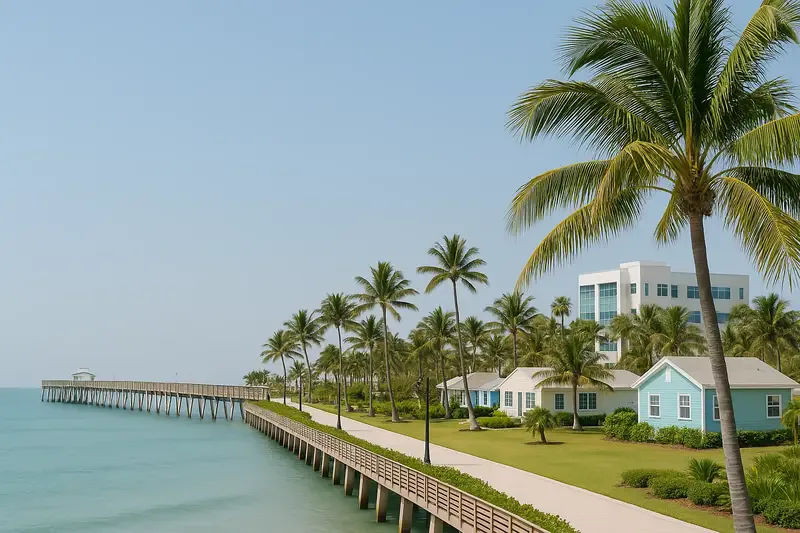
West Palm Beach sits 18 miles north of RECO Health’s Delray Beach campus along I-95 or Federal Highway — a 28-minute drive outside of rush hour that makes daily rTMS attendance realistic for residents of El Cid, Flamingo Park, Northwood Hills, SoSo, and downtown West Palm Beach. For Palm Beach County residents south of Okeechobee Boulevard, the Delray campus is the nearest specialist-level psychiatry program running the full FDA-cleared 36-session Transcranial Magnetic Stimulation protocol for treatment-resistant depression alongside integrated medication management, ketamine services, and PHP/IOP levels of care.
Who is a candidate for rTMS
The insurance-covered indication for repetitive Transcranial Magnetic Stimulation is major depressive disorder with documented failure of at least two adequate antidepressant trials from separate mechanistic classes. “Adequate” is a specific claim: therapeutic dose (sertraline 150-200 mg, escitalopram 20 mg, venlafaxine XR 225 mg or equivalent), a minimum of six weeks at target dose, and documented adherence. Augmentation strategies — aripiprazole, lithium, quetiapine XR — that failed to produce remission also count toward the trial history payers will accept.
On the deep TMS H-coil platform, RECO treats obsessive-compulsive disorder as well, with baseline YBOCS documentation and a similar prior-authorization pathway. Candidacy screening rules out contraindications: ferromagnetic implants within 30 cm of the coil, cochlear implants, deep brain stimulators, personal history of seizure disorder, and active unstable substance use that would compromise session attendance or lower seizure threshold. High-dose bupropion, tramadol, and clozapine each require case-by-case review.
Initial evaluation includes PHQ-9 and GAD-7 baselines, a MINI-anchored diagnostic interview, and — when substance use is in the picture — an ASAM Criteria assessment across the six dimensions. RECO’s psychiatry team confirms candidacy, drafts the treatment-history letter, and handles the prior authorization before the mapping session is scheduled.
The 36-session protocol and what it actually looks like
Session one is motor threshold mapping. The clinician positions the figure-eight coil over the primary motor cortex, incrementally raises pulse intensity, and identifies the minimum stimulator output that reliably produces a right-thumb twitch on five of ten pulses. Treatment intensity is then set at 120% of that motor threshold, and the coil is moved 5 cm anterior — or, on neuronavigated systems, positioned by MNI coordinate — to the left dorsolateral prefrontal cortex.
Sessions two through thirty are daily Monday through Friday. The standard high-frequency protocol delivers 3,000 pulses at 10 Hz in 4-second trains with 26-second intertrain intervals, running roughly 37.5 minutes in the chair. Sessions thirty-one through thirty-six are the taper: three per week, then two, then one. Clients remain fully awake, drive themselves home, and return to work or class the same day. Adverse effects are limited to mild scalp discomfort at the coil site and occasional tension-type headache during the first week, both of which typically extinguish by session five.
Response, remission, and the second-course question
Published response rates for rTMS in treatment-resistant depression run 40-60% depending on protocol and definition; remission rates run 25-40%. Response is defined as a 50% reduction in PHQ-9 or Hamilton Depression Rating Scale scores; remission means dropping below the clinical threshold. Response typically emerges between sessions 15 and 25, with continued gains through the taper — which is why premature discontinuation at session 20 is one of the most common preventable treatment failures in outpatient TMS.
Non-responders at session 20-25 are re-evaluated rather than pushed through the remaining course on autopilot. Sometimes the coil position warrants adjustment toward Beam F3 or a neuronavigated target. Sometimes a switch to intermittent theta burst is warranted. And sometimes the clinical picture — psychotic features, bipolar spectrum, prominent anhedonia — belongs on the ketamine or intranasal esketamine (Spravato) pathway instead, which RECO delivers on-site. Responders who later relapse, typically 12-18 months out, are candidates for a second full course; reimbursement for retreatment is standard once the initial response is documented.
iTBS and the shorter-session option
Intermittent Theta Burst Stimulation is an FDA-cleared alternative rTMS protocol that delivers 600 pulses in approximately three minutes rather than the 37.5-minute high-frequency session. The THREE-D non-inferiority trial demonstrated equivalent efficacy to standard 10 Hz stimulation, and iTBS is now first-line at many academic centers for exactly this reason: it removes the scheduling barrier that causes otherwise good candidates to decline treatment.
For West Palm Beach commuters who cannot absorb a 45-minute treatment window plus round-trip drive time into a working day, iTBS makes daily attendance realistic. Not every commercial plan reimburses iTBS at the same rate as standard rTMS; RECO’s psychiatry team confirms coverage during prior authorization and, where iTBS is not covered, sequences the standard protocol at times that fit the client’s schedule.
What to expect on the first visit
The initial appointment is a psychiatric evaluation with a board-certified psychiatrist, not a technician handoff. Expect a full medication reconciliation, a review of every prior antidepressant trial with dose and duration, structured PHQ-9 and GAD-7 administration, and — where indicated — YBOCS, ASRS, or Mood Disorder Questionnaire screening to rule out bipolar spectrum or ADHD contributions that change the treatment plan.
Concurrent psychotherapy is discussed at this visit. CBT with behavioral activation, ACT, and mindfulness-based cognitive therapy each have evidence for augmenting rTMS response and reducing relapse rates; RECO’s outpatient clinicians provide these in individual and group formats and coordinate directly with the TMS team. Clients also working on substance use receive an ASAM Criteria assessment and, where warranted, buprenorphine or naltrexone induction managed by the same psychiatry team.
Insurance and admissions from West Palm Beach
RECO Health is in-network with Florida Blue, Aetna, Cigna, UnitedHealthcare, Humana, and Blue Cross Blue Shield. Prior authorization for rTMS requires documentation of two adequate antidepressant trials — typically one SSRI (sertraline, escitalopram, fluoxetine) and one SNRI (venlafaxine, duloxetine), or an augmentation trial with aripiprazole, lithium, or quetiapine. Admissions coordinators pull records from prior prescribers, draft the letter of medical necessity, and manage the appeal if the initial request is denied.
Most West Palm Beach clients drive themselves down I-95 to the Linton Boulevard or Atlantic Avenue exits; the Delray campus offers on-site parking and appointment times before 9 a.m. and after 4 p.m. for clients bracketing treatment around a work day.
Serving residents of: El Cid, Flamingo Park, Northwood Hills, SoSo, Downtown WPB.
If it's any of these, we can help.
From West Palm Beach callers, most asked.
Does insurance cover TMS therapy for West Palm Beach residents?
How long does a full course of TMS take?
What happens at the first TMS appointment?
How does TMS actually work in the brain?
How do I get to RECO Health from West Palm Beach?
Can family members be involved in TMS treatment?
Other west palm beach-area communities we serve.
Confidential. No commitment.
Tell us a little and a real human from admissions will call you back. We verify insurance benefits within minutes and tell you honestly whether RECO Health is the right fit — including if we should refer you elsewhere.