
TMS therapy for Boynton Beach — FDA-cleared TRD care, 12 minutes from home.
A specialist outpatient program for clients in Boynton Beach. PHP, IOP, in-house psychiatry, sober-living network, family programming. Same admissions team, 24/7.
Start the conversation Or call directly — (561) 464-4077Local options exist. This is the clinical specialist.
RECO Health's psychiatry team delivers both figure-8 rTMS and deep TMS on the BrainsWay H1 platform from a Delray Beach campus 12 minutes down Federal Highway from Renaissance Commons and Quantum Park. The full 36-session FDA-cleared protocol runs Monday through Friday, with an in-house iTBS option for patients whose schedule cannot absorb a 40-minute daily visit. Prior authorization is handled by the intake team rather than pushed back onto the patient, and continuing pharmacotherapy through the course is standard practice.
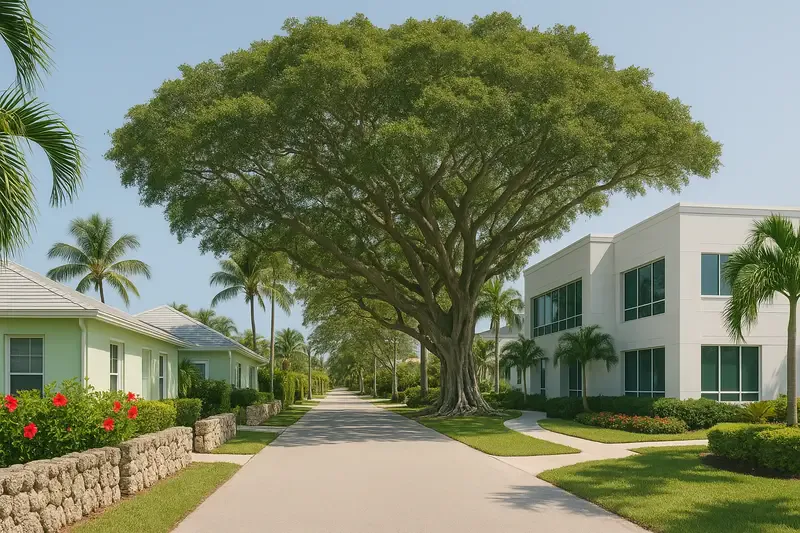
Boynton Beach sits seven miles north of RECO Health’s Delray Beach campus along Federal Highway, close enough that residents in Renaissance Commons, Ocean Ridge, and Quantum Park can complete a daily TMS therapy session and be back at their desks before lunch. That geographic accessibility matters more for TMS than for most psychiatric care: the FDA-cleared course requires roughly thirty consecutive weekday treatments, and drive time is often what determines whether a patient completes the protocol at all. RECO Health delivers both figure-8 coil rTMS and deep TMS on the BrainsWay H1 platform, with an intermittent theta burst (iTBS) option for patients who cannot accommodate a longer chair time.
Who is a candidate for rTMS
Insurance-covered rTMS is indicated for adults with major depressive disorder who have failed at least two adequate antidepressant trials — meaning appropriate dose, a minimum of six weeks at therapeutic dose, and documented adherence. Common failed regimens include an SSRI such as sertraline or escitalopram, a second-line SNRI such as venlafaxine or duloxetine, and often an augmentation trial with aripiprazole, quetiapine, or lithium. A PHQ-9 score of 15 or higher, corroborated by a clinician-rated depression scale, is generally documented at intake. Deep TMS on the BrainsWay H7 coil is separately FDA-cleared for obsessive-compulsive disorder; candidacy there anchors to a Y-BOCS score of 20 or higher after an adequate SSRI trial at maximum tolerated dose.
Clinical candidacy also requires ruling out absolute contraindications: ferromagnetic implants within roughly 30 cm of the coil (aneurysm clips, cochlear implants, deep brain stimulators), a personal history of unprovoked seizure, and unstable substance use that meaningfully raises seizure-threshold volatility. Pregnancy is not a contraindication but is documented and discussed. RECO Health’s psychiatry team compiles the treatment-history record and drives the prior authorization — most commercial payors require several pages of chart notes demonstrating the two failed trials before the mapping session is scheduled.
The 36-session protocol, session by session
Session one is motor threshold mapping. The technician places the coil over the primary motor cortex and identifies the minimum stimulator output that reliably evokes a visible thumb twitch in the abductor pollicis brevis. Treatment intensity is then set at 120% of that motor threshold, and the coil is repositioned to the left dorsolateral prefrontal cortex using either the 5-cm rule or Beam F3 targeting. The standard high-frequency protocol delivers 3,000 pulses per session at 10 Hz — 4-second trains separated by 26-second inter-train intervals — over approximately 37 minutes in the chair.
Sessions two through thirty run daily, Monday through Friday, for six weeks. Sessions thirty-one through thirty-six form a three-week taper: three sessions in week seven, two in week eight, one in week nine. Patients drive themselves home, return to work the same day, and typically report only mild scalp discomfort or a transient tension-type headache during the first week. Seizure risk with standard protocols is on the order of 1 in 30,000 sessions — comparable to the seizure risk associated with therapeutic-dose bupropion. There is no sedation, no cognitive interference, and no memory impairment of the kind associated with ECT.
Response, remission, and the second-course question
Published response rates for rTMS in treatment-resistant depression run 40-60% depending on protocol and definition; remission rates land between 25% and 40%. A clinical response — a 50% reduction from baseline PHQ-9 or Hamilton scores — typically emerges between sessions 15 and 25, with continued gains through the taper. Patients who show no measurable movement by session 20 are re-evaluated by the treating psychiatrist. Sometimes coil positioning warrants adjustment; sometimes the protocol is switched to iTBS; sometimes the clinical formulation shifts and the case moves onto the ketamine or intranasal esketamine pathway instead.
Responders who later relapse — typically 6-12 months out — are candidates for a second full 36-session course, and most commercial payors will authorize a repeat course when documented response was achieved the first time. Maintenance protocols (weekly or monthly single sessions) are used selectively, generally reserved for patients with a history of rapid relapse. Continuing pharmacotherapy through and after the rTMS course is standard practice and does not diminish response; medication adjustments are typically deferred until the interim PHQ-9 at session 10 or 15.
iTBS and the shorter-session option
Intermittent Theta Burst Stimulation compresses a full treatment into roughly three minutes of active coil time by delivering triplet bursts at 50 Hz repeated at 5 Hz. The THREE-D non-inferiority trial (Blumberger et al., 2018) established that iTBS produces response and remission rates equivalent to standard 10 Hz rTMS across a six-week course. For patients whose workday cannot absorb a 40-minute session, iTBS makes daily treatment realistic — the entire visit, including check-in and coil setup, usually runs under 15 minutes.
Insurance coverage for iTBS generally aligns with standard rTMS across the major commercial plans in Florida, but reimbursement mechanics differ and a small number of plans still require separate documentation. RECO Health’s psychiatry team confirms iTBS coverage before enrollment and, when clinically warranted, sequences standard rTMS and iTBS within the same course based on tolerability, schedule, and interim response.
What to expect on your first visit
The first appointment is a psychiatric consultation — 60 to 90 minutes with a board-certified psychiatrist. The interview documents depressive symptom history, prior medication trials by dose and duration, current medications, medical history, and psychiatric comorbidities screened with the PHQ-9, GAD-7, and where relevant the Y-BOCS or ASRS. If the history supports candidacy, the psychiatrist writes the treatment plan and the intake coordinator opens prior authorization the same day.
Motor threshold mapping is scheduled as a separate visit, usually within one to two weeks of authorization. That session runs 45 to 60 minutes and includes a brief tolerability run at 120% MT. Daily treatment begins the next business day. Patients are asked to keep pharmacotherapy stable through the first two weeks of the course; concurrent psychotherapy — CBT, ACT, or behavioral activation — is encouraged and integrates cleanly with the treatment schedule.
Insurance and admissions from Boynton Beach
RECO Health is in-network with Florida Blue, Aetna, Cigna, UnitedHealthcare, Humana, and most BCBS plans for both rTMS and iTBS. Prior authorization is required across all commercial plans and is coordinated entirely in-house — patients are not asked to gather chart notes from previous prescribers themselves. The typical timeline from first consultation to first treatment session is 10 to 21 days, driven mostly by how quickly outside records arrive.
The drive from Renaissance Commons or Hunters Run runs 12 to 15 minutes down Federal Highway or Congress Avenue; from Ocean Ridge and Briny Breezes, closer to 10 minutes along A1A and Ocean Boulevard. Parking at the Delray Beach campus is free and immediately adjacent to the outpatient psychiatry suite.
Serving residents of: Renaissance Commons, Ocean Ridge, Quantum Park, Hunters Run, Briny Breezes.
If it's any of these, we can help.
From Boynton Beach callers, most asked.
Does insurance cover TMS therapy at RECO Health for Boynton Beach residents?
How long does a full course of TMS take from first appointment to last session?
What happens during the first TMS appointment?
How does TMS actually work in the brain?
How do I get to RECO Health from Boynton Beach?
Can family members be involved in the TMS treatment plan?
Other boynton beach-area communities we serve.


Confidential. No commitment.
Tell us a little and a real human from admissions will call you back. We verify insurance benefits within minutes and tell you honestly whether RECO Health is the right fit — including if we should refer you elsewhere.