
TMS therapy for Delray Beach — FDA-cleared TRD care, 0 minutes from home.
A specialist outpatient program for clients in Delray Beach. PHP, IOP, in-house psychiatry, sober-living network, family programming. Same admissions team, 24/7.
Start the conversation Or call directly — (561) 464-4077Local options exist. This is the clinical specialist.
RECO Health's psychiatry suite is at 140 NE 4th Avenue — zero drive time from Pineapple Grove, Lake Ida, Tropic Isle, and the Beach District. The clinic delivers the full FDA-cleared 36-session rTMS protocol at 10 Hz, 120% of motor threshold over the left dlPFC, plus deep TMS for OCD and iTBS for patients with schedule constraints. Prior authorization for Florida Blue, Aetna, Cigna, UnitedHealthcare, Humana, and BCBS is handled in-house before motor threshold mapping is scheduled, and adjunct psychiatry, ketamine, and outpatient therapy sit inside the same medical record.
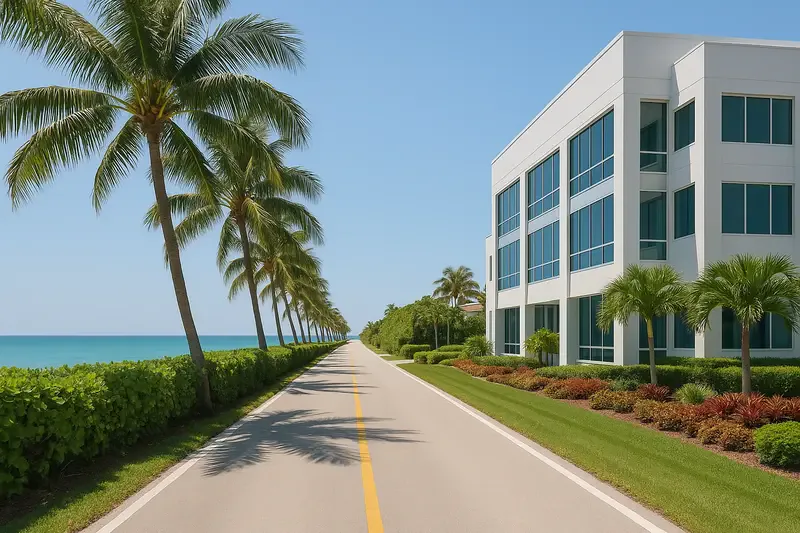
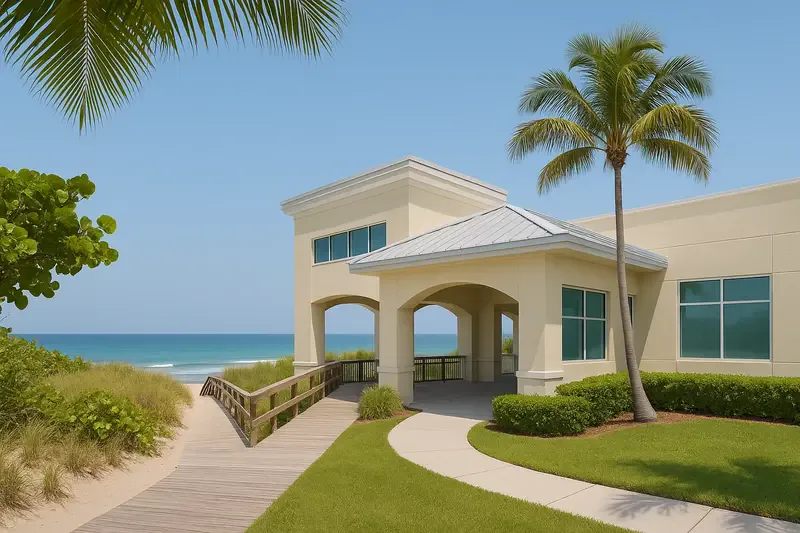
RECO Health’s psychiatry suite sits at 140 NE 4th Avenue in Delray Beach, one block north of Atlantic Avenue and a five-minute walk from the ocean. For residents of Pineapple Grove, Lake Ida, Tropic Isle, the Beach District, and Osceola Park, repetitive transcranial magnetic stimulation happens in the same square mile where the rest of daily life already happens — no highway commute, no relocation, no interruption to school pickup or the workday. The clinic delivers the full FDA-cleared TMS therapy protocol for treatment-resistant major depressive disorder and, on the deep TMS H1 coil, for obsessive-compulsive disorder.
Who is a candidate for rTMS
The insurance-covered indication for repetitive transcranial magnetic stimulation is major depressive disorder with documented failure of at least two adequate antidepressant trials. “Adequate” carries specific weight in the medical necessity criteria: therapeutic dose, minimum six-week duration, verified adherence. A patient who tried sertraline at 50 mg for three weeks and stopped for GI side effects has not completed one adequate trial for prior authorization purposes. RECO’s psychiatry team reconstructs the full medication history — sertraline, escitalopram, venlafaxine, bupropion, aripiprazole or lithium augmentation — often across multiple prior prescribers before submitting to the payer.
Screening also rules out absolute contraindications: ferromagnetic implants within 30 centimeters of the coil (cochlear implants, aneurysm clips, deep brain stimulators), a personal history of seizure disorder, and untreated active substance use with elevated seizure risk. Patients on bupropion at doses above 300 mg, tramadol, or high-dose stimulants receive individualized risk assessment because these agents lower seizure threshold. PHQ-9 is scored at intake and repeated every five sessions to track objective response, and comorbid conditions are assessed with GAD-7, PCL-5, YBOCS, ASRS, and CIWA or COWS as clinically indicated.
The 36-session protocol and what it actually looks like
Session one is motor threshold mapping. The technician positions the figure-8 coil over the primary motor cortex and delivers single pulses at increasing intensity until a reliable thumb twitch appears on the contralateral hand in at least five of ten stimulations. That value becomes the resting motor threshold; treatment intensity is set at 120% of that threshold and delivered over the left dorsolateral prefrontal cortex, targeted by the Beam F3 method.
Sessions two through thirty run daily, Monday through Friday, for six consecutive weeks. Standard 10 Hz protocol delivers 3,000 pulses per session in a four-second-on, twenty-six-second-off pattern across roughly 37 minutes. Patients sit upright, awake, uncovered — no sedation, no IV, no fasting. Most read or listen to music. First-week scalp discomfort and mild frontal headache are common and typically resolve by session ten. There is no cognitive impairment, no memory loss, no post-session recovery window. Patients drive to and from the clinic and return to work the same day.
The final six sessions are the taper: three sessions in week seven, two in week eight, one in week nine. The taper is not cosmetic — it consolidates the response and reduces the early relapse rate demonstrated in the pivotal registration trials.
Response, remission, and the second-course question
Published response rates for rTMS in treatment-resistant depression run 40-60% depending on the definition of response and the rigor of the trial. Remission — a PHQ-9 sustained below five across two consecutive measurements — occurs in 25-40% of the treated population. Response typically emerges between sessions 15 and 25 and continues to deepen through the taper. Waiting through the first three weeks without visible change is normal and does not predict eventual outcome.
Non-response by session 20-25 triggers a case review. Coil positioning is re-verified against the Beam F3 target, since drift by even a centimeter meaningfully reduces engagement of the left dlPFC. If positioning is correct and PHQ-9 has not moved, options include switching to intermittent theta burst stimulation, converting to the deep TMS H1 coil, or transitioning the case to RECO’s ketamine or esketamine pathway. Treatment-resistant depression is a heterogeneous diagnostic target; a single protocol failure is not a treatment failure.
Responders who later relapse are candidates for a second full course, typically 12-18 months after the first. Maintenance protocols — one session every two to four weeks — are offered when insurance permits and the clinical picture supports it.
iTBS and the shorter-session option
Intermittent theta burst stimulation is an FDA-cleared alternative protocol that delivers 600 pulses of neuromodulatory input in a three-minute session rather than a 37-minute session. The THREE-D non-inferiority trial demonstrated equivalent response and remission across the two protocols in treatment-resistant depression. For patients whose schedule cannot absorb a 45-minute daily treatment window — parents of school-age children, shift workers, small-business owners on Atlantic Avenue — iTBS makes six weeks of daily neuromodulation logistically feasible.
Not every commercial plan reimburses iTBS at parity with conventional 10 Hz rTMS. The insurance team confirms coverage before enrollment; if iTBS is not covered, the standard 10 Hz protocol is scheduled instead. Clinical outcomes are equivalent — the trade-off is time in the chair versus billing code.
What to expect on your first visit
The intake appointment is 60-90 minutes with a psychiatric provider. Expect a full DSM-5 diagnostic interview, PHQ-9 and GAD-7 scoring, and a detailed review of every antidepressant trial with dose, duration, and reason for discontinuation. Bring pill bottles or a pharmacy printout if possible. A brief neurological exam focuses on seizure risk factors and screening for implanted metallic devices. Adjunct diagnoses — panic disorder, PTSD, OCD, ADHD, alcohol use disorder — are addressed on the same visit using PCL-5, YBOCS, ASRS, and the ASAM Criteria as indicated.
If TMS is clinically indicated, prior authorization is submitted within 48 hours. Insurance turnaround is typically 5-10 business days. Motor threshold mapping is scheduled once approval returns. From first phone call to first treatment session, the typical timeline is two to three weeks.
Insurance and admissions from Delray Beach
The clinic is in-network with most major commercial insurers, including Florida Blue, Aetna, Cigna, UnitedHealthcare, Humana, and BCBS. Medicare covers rTMS for major depressive disorder under standard national coverage criteria. Medicaid coverage varies by managed care organization and is verified case by case. Self-pay pricing is disclosed in writing before the first mapping session.
Because RECO’s main campus is a walk or short drive from every Delray Beach neighborhood, patients complete the six-week daily phase without the attrition that plagues out-of-area TMS courses. Adjunct services — medication management, ketamine infusion, individual therapy in CBT, DBT, ACT, EMDR, and MI — are coordinated from the same medical record.
Serving residents of: Pineapple Grove, Lake Ida, Tropic Isle, Beach District, Osceola Park.
If it's any of these, we can help.
From Delray Beach callers, most asked.
Does insurance cover TMS therapy at RECO Health for Delray Beach residents?
How long is the full TMS course, and what is the day-to-day time commitment?
What happens at the first TMS appointment at RECO Health?
How does repetitive TMS actually work on depression?
How do I get to RECO Health from Delray Beach?
Can family members be involved, and how is privacy protected?
Other delray beach-area communities we serve.

Confidential. No commitment.
Tell us a little and a real human from admissions will call you back. We verify insurance benefits within minutes and tell you honestly whether RECO Health is the right fit — including if we should refer you elsewhere.