Top 5 Sober Living Resources After South Florida Rehab
You may be out of rehab and still feel shaky. That is more common than people admit. The first nights home can feel quiet in the worst way. If you are searching for sober living resources in South Florida, you are probably trying to avoid relapse, not chase perfection. The hardest part is often the […]
You may be out of rehab and still feel shaky. That is more common than people admit. The first nights home can feel quiet in the worst way. If you are searching for sober living resources in South Florida, you are probably trying to avoid relapse, not chase perfection.
The hardest part is often the in-between space. You have left structured treatment, yet real life has already started calling. Bills, family tension, cravings, and sleep trouble can all hit at once. That is why aftercare planning after rehab matters so much, especially near Delray Beach, where the recovery community is active and visible.
At RECO Health, we see this transition as a clinical matter, not a character test. The right support can lower chaos and help you keep building. The wrong setup can feel too loose, too lonely, or too much like your old life. Here is how to choose wisely.
1) A sober living house that actually fits your recovery rhythm
What to look for when your days still feel unstable after rehab
A sober living house should do more than provide a bed. It should give your day shape while your nervous system settles. Early recovery often brings poor sleep, irritability, low appetite, and a strange sense of time. That is why sober housing near Delray Beach for early recovery should be judged by structure, not charm.
Look for clear rules, house meetings, curfews, and expectations for drug testing. You may also want a home that supports recovery housing for men or recovery housing for women, depending on what feels safest. Mixed settings can work for some people, but others need firmer boundaries. That is not weakness. It is smart planning.
A young man we met in Delray Beach said his biggest trigger was silence after dinner. He had gone from inpatient rehab in Palm Beach County to an empty apartment in one week. A sober house with evening check-ins and shared meals gave him enough contact to stay grounded.
How sober housing near Delray Beach supports structure, curfews, and accountability
Sober housing near Delray Beach often works best when it mirrors the rhythm of treatment. In practice, that means wake-up times, job search hours, meeting attendance, and a clear curfew. Those simple anchors matter because relapse often grows in unstructured time. The goal is not control. The goal is steadiness.
If you are comparing options, ask how the house handles visitors, phone use, chores, and medications. A serious program should also connect housing with transitional living after treatment in Delray Beach. That link between home life and clinical care matters, especially if you are still using outpatient program Delray Beach services or mental health IOP support. Consistency beats intensity alone.
Here is the part most people miss. A good house does not rescue you from accountability. It teaches you to practice it daily. That practice often becomes the bridge to long-term recovery.
When a men’s recovery or women’s rehab setting makes the transition safer
Gender-specific housing can reduce stress in early recovery. Some people feel safer in a men’s recovery setting or a women’s rehab environment because it lowers social pressure. That can matter if trauma, shame, or relationship patterns still feel raw. Safety helps the brain learn new habits.
This is especially important if you are also dealing with trauma therapy South Florida needs, PTSD treatment, or anxiety treatment. Boundaries can feel clearer in a gender-specific home. For some, that clarity makes medication-assisted treatment, group attendance, and sleep routines easier to keep. You do not need every option. You need the right fit.
The best question is simple: where will you be less likely to hide? If a setting makes you quieter, more defensive, or more isolated, that matters. Recovery often improves when the environment feels calm, direct, and predictable.
Why proximity to the Delray Beach recovery community can reduce isolation
Proximity matters more than people expect. Near Atlantic Avenue, meetings, cafés, job sites, and peer support are all within reach. That can help you stay engaged without driving across half of Palm Beach County after a long day. The Delray Beach recovery community can make follow-through easier.
That does not mean you must live in the center of town. It means the house should connect you to support, not separate you from it. When a sober home makes it easier to get to AA, NA, SMART Recovery, or alumni support, the odds of drifting drop. Small choices stack up fast.
If you want a nearby option that keeps the clinical thread intact, start with our medical detox process and continue into housing and outpatient support as needed. Recovery is less fragile when each part talks to the next.
2) The outpatient program that keeps life moving without losing clinical support
When a Delray Beach outpatient program makes more sense than going straight home
Going straight home after rehab sounds simple. It often is not. If your days are still shaky, a Delray Beach outpatient program can give you structure without pulling you out of work, school, or family life. That balance matters when you are trying to rebuild trust and stay sober at the same time.
Outpatient care can be especially helpful after cocaine detox Florida follow-up care, opioid rehab in Delray support, or prescription pill addiction treatment. It can also fit people leaving an alcoholism treatment center who still need regular support. The point is not just to show up. The point is to keep clinical care close while you practice real life.
We hear this from clients almost every week. They do not need more drama. They need a schedule they can live with. That is where outpatient care earns its place.
How to compare intensive outpatient, mental health IOP, and partial hospitalization step-down
It helps to know the difference between the levels. A partial hospitalization program is usually the most structured outpatient step-down. Intensive outpatient sits below that, with fewer hours and more flexibility. Mental health IOP adds support for depression, anxiety, bipolar disorder, or other co-occurring disorders.
Level of careBest forTypical feelPHPHigher support needsFull, structured daysIOPSteady step-downSeveral sessions weeklyMental health IOPDual diagnosis supportTherapy plus symptom careIf you are asking what is PHP vs IOP, the answer depends on stability. PHP works better when cravings or mood symptoms still feel intense. IOP can be the right middle ground when you need support, but not all day. For more detail, many families compare partial hospitalization program step-down in Florida with intensive outpatient treatment in South Florida.
Which signs tell you the schedule is too light or too heavy for early recovery
A schedule is too light if your week has too much open time and not enough support. It is too heavy if you are constantly exhausted and falling behind on basic life tasks. Either problem can create risk. Early recovery needs enough structure to hold you, but not so much that you burn out.
Watch for warning signs. Missed meetings, rising irritability, skipped meals, and poor sleep all matter. So does that old “I can handle it alone” thinking. The right outpatient program in Delray Beach should adjust as you stabilize, not leave you guessing.
One client returned to treatment after trying to work full time and attend nightly meetings five days a week. He was proud, but drained. Once his care plan shifted to a better-fit outpatient rhythm, he could actually absorb the tools instead of just surviving the week.
Why dual diagnosis treatment matters when depression and addiction travel together
Dual diagnosis treatment matters because substance use and mental health symptoms often feed each other. NIDA has long emphasized the co-occurring disorder model. If depression, PTSD, anxiety, or bipolar symptoms are active, recovery usually needs both sides treated together. Treating only one leaves the other in charge.
That is why dual diagnosis treatment for depression and addiction support and mental health IOP for co-occurring disorders support can be central after rehab. Evidence-based treatment often includes CBT, DBT, and medication support when appropriate. A good program should explain the plan in plain language. No fog. No guesswork.
3) A recovery calendar built around support, not willpower
How SMART Recovery, 12-step alternatives, AA, and NA can work side by side
Recovery is easier when your week has touchpoints. Some people do well with AA or NA. Others connect better with SMART Recovery and 12-step alternatives. Many use both. That is normal, and often wise.
The key is not ideology. The key is contact. Regular meetings reduce isolation and remind you that cravings can pass. If you are rebuilding after South Florida rehab, that rhythm can matter more than the format.
A recovery calendar should be practical. Put meetings on the calendar. Put meals on the calendar. Put sleep on the calendar if you have to. That may sound basic, but basic is often what works first.
Why alumni program support and aftercare planning lower the risk of drifting
The weeks after discharge can feel oddly slippery. That is where alumni program support and aftercare planning after rehab for long-term recovery can help. An alumni program keeps your name in the room after formal treatment ends. It turns “finished” into “still connected.”
A strong aftercare plan should include relapse prevention planning, therapist follow-up, and a contact list. It should also give you a plan for weekends, holidays, and stressful days. For many people, aftercare and alumni support in Palm Beach County is what keeps progress from fading. Recovery rarely fails in one dramatic moment. It usually slips when support thins out.
Here is what almost no online guide mentions. People often do best when the aftercare schedule is boring. Predictable. Repetitive. That is not a lack of progress. It is progress taking root.
What case management, life skills training, and vocational support should really include
Case management should not be just paperwork. It should help you solve the real problems that threaten recovery. That can include transportation, appointments, job searches, medication refills, and housing questions. Life skills training in recovery should also cover budgeting, meal prep, and time management. 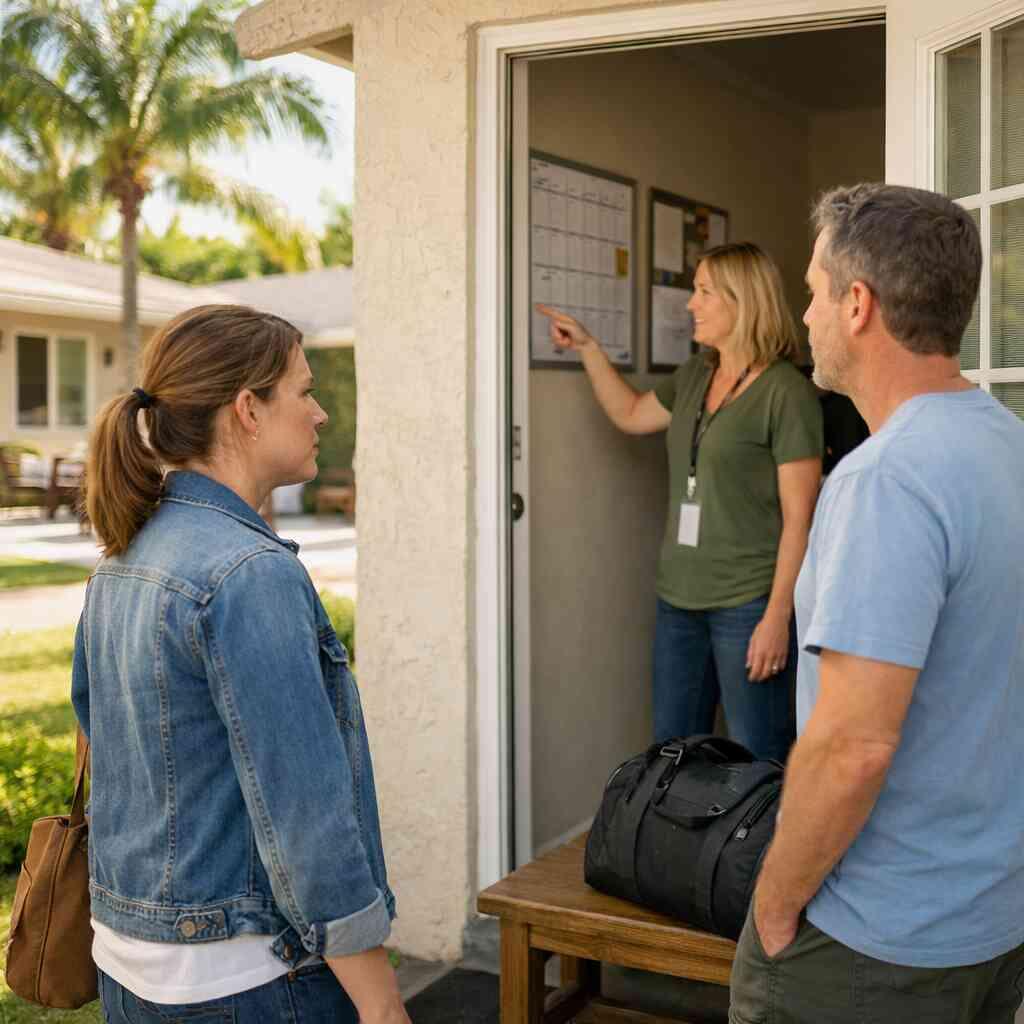
Vocational support after rehab matters because purpose helps stabilize mood. If you are trying to rebuild work after fentanyl treatment, heroin recovery, or benzodiazepine withdrawal, practical guidance can lower panic. Even one good weekly check-in can keep small problems from becoming major ones. This is especially useful in a Delray Beach recovery community that values momentum.
How family therapy and family weekend can help repair trust without overpromising
Family therapy after rehab can help, but it does not erase hurt overnight. Trust is rebuilt through repeated, honest contact. A family weekend can open conversations that were too charged before. It can also teach relatives how to support without enabling.
If family dynamics are part of the relapse pattern, family therapy after rehab for recovery support may be worth including early. Families often need language for boundaries, expectations, and fear. The goal is not a perfect reunion. The goal is a safer one.
4) The clinical resources that matter when cravings, trauma, or mood symptoms show up
When medication-assisted treatment with Suboxone maintenance or Vivitrol injections is worth discussing
Medication-assisted treatment can be a major support for opioid recovery. Suboxone maintenance may help reduce withdrawal and cravings. Vivitrol injections may help some people stay steady after detox. These are FDA-approved options, and they belong in the conversation when opioid rehab Delray or fentanyl treatment aftercare is part of your story.
MAT is not about replacing one problem with another. It is about reducing risk while you build skills. A licensed clinician should review your history, current use, and mental health symptoms before recommending anything. If you want to learn more, see MAT support with Suboxone and Vivitrol for opioid recovery.
How trauma therapy South Florida programs may use CBT, DBT, or EMDR for PTSD and anxiety treatment
Trauma often hides behind addiction. That is why trauma therapy South Florida programs may use CBT, DBT, or EMDR. CBT helps you challenge distorted thinking. DBT helps with emotion regulation and distress tolerance. EMDR can help process painful memories in a structured way.
These methods are evidence-based, but they are not magic. They work through repetition, honesty, and patience. If PTSD treatment, depression and addiction, or anxiety treatment are in the picture, ask how the program integrates therapy with daily care. A good answer should sound clear, not clever.
What to expect from group therapy activities, mindfulness meditation, yoga therapy, and art therapy
Group therapy activities can feel awkward at first. That is normal. Over time, groups often become the place where people test new language and hear what honesty sounds like. Mindfulness meditation, yoga therapy, and art therapy may also support recovery by helping the body calm down.
These holistic recovery tools are not replacements for clinical care. They work best alongside licensed clinicians and structured therapy. A walk by the water can help, but it does not replace treatment. The coastal healing environment near Delray Beach is real, yet it works best when paired with evidence-based treatment.
Why licensed clinicians and evidence-based treatment matter more than a pretty setting near the beach
A beachside recovery setting can be soothing. Still, scenery does not treat addiction. You want licensed clinicians, sound protocols, and a program that can explain why it uses each service. Joint Commission accreditation, DCF-licensed standards, and transparent care planning matter more than stylish furniture.
If you are comparing Florida addiction treatment and levels of care or checking residential treatment in Palm Beach County, ask about evidence. Ask about CBT, DBT, EMDR, and medication options. Ask how the team handles co-occurring disorders support. Good care should feel calm, grounded, and specific.
5) The practical checklist that keeps sober living from becoming guesswork
How to judge insurance verification, out-of-network benefits, and self-pay options before you move in
Money stress can push people into bad choices. Before you move into sober housing or step into outpatient care, ask for a full insurance verification for Florida rehab options. Confirm Aetna, Cigna, Blue Cross Blue Shield, out-of-network benefits, and self-pay options in writing. Do not assume coverage.
A sober living resource should be able to explain the basics. What is included? What is separate? What happens if your plan changes? Clear answers protect you from surprises.
What sober living should ask about relapse prevention, coping skills, and aftercare support
Sober living should ask about your triggers, coping skills, and relapse prevention planning. It should also ask what treatment you just finished and what you still need. That can include continued therapy, medication support, and alumni connection. If a house asks nothing, that is a warning sign.
Strong programs also talk about aftercare support. That includes meeting schedules, curfew expectations, and emergency contacts. A good house does not just rent space. It supports recovery behavior. That distinction matters.
When to look for housing tied to inpatient rehab Palm Beach County or a residential treatment facility
Sometimes the safest move is to stay linked to treatment longer. If cravings are strong, sleep is poor, or your mood is unstable, housing connected to a residential treatment facility may be the better option. That can create a smoother step-down from inpatient rehab Palm Beach County into sober living. It reduces the gap where people often slip.
Here is a useful rule. If you would still need daily clinical support after moving in, choose housing with a treatment bridge. If you can manage with outpatient care and stable routines, a sober house may be enough. The right answer depends on your current risk, not your pride.
How to use local resources in Delray Beach, Palm Beach County, and nearby South Florida without getting overwhelmed
You do not need to use every local resource at once. Start with the few that match your needs. In Delray Beach, that may mean an outpatient program, meetings near Atlantic Avenue, and a sober house close to support. In Palm Beach County, it may mean housing plus alumni check-ins and family work.
If you are comparing options, begin with one call to Florida addiction treatment and levels of care and ask about next steps. That can include intake process questions, insurance verification, and aftercare planning. You do not have to figure this out alone, and you do not have to figure it all out today. Start with one phone call, then choose the next safest thing.
Frequently Asked Questions
How long does detox last at a Delray Beach rehab?
Detox length varies by substance, use pattern, and health history. Alcohol, opioids, benzodiazepines, and fentanyl can each follow different timelines. A clinician should review your symptoms before giving a range. If you want safer planning, ask about South Florida detox and medical monitoring. That is especially important with alcohol withdrawal or benzodiazepine withdrawal.
What is the difference between PHP and IOP?
PHP, or partial hospitalization, gives you more weekly structure and clinical contact. IOP, or intensive outpatient, gives you fewer hours and more flexibility. PHP often fits people who still need daily support. IOP fits people who can manage more independence. If you are unsure, compare PHP vs IOP in Palm Beach County for recovery step-down.
Can I bring my phone to treatment or sober living?
Policies vary by program and level of care. Some programs limit phone use early on to help you focus. Others allow supervised or scheduled use. Ask about device rules before admission. Clear expectations reduce stress and family confusion.
Is family involved in the program?
Many programs include family therapy, education, or family weekend options. The amount of involvement depends on your clinical needs and the program structure. Family support can help, but it should also include boundaries. If this matters to you, review family therapy after rehab for recovery support.
What if I need help for depression but not addiction?
You still deserve care. Mental health IOP, therapy, and psychiatric support can help with depression, anxiety, bipolar symptoms, and trauma. A good program should screen for substance use without assuming it is the only issue. If depression and addiction both appear, dual diagnosis treatment may be the better fit.
Does RECO Health take my insurance?
Coverage depends on your plan, benefits, and level of care. The safest move is to verify directly before admission. Ask about Aetna, Cigna, Blue Cross Blue Shield, out-of-network benefits, and self-pay options. Use insurance verification for Florida rehab options to prepare your questions.
What should I do today if I’m worried about relapse?
Call one trusted provider, one sober contact, or one meeting line today. Then write down your next 24 hours in plain steps. Food, sleep, contact, and support come first. If your risk feels high, seek immediate clinical help and ask for detox or a higher level of care.
*”I feel like RECO treatment is one of the best in Florida. I have been to several treatment centers and RECO is definitely better in almost every area. I can honesty say all the employees genuinely care. They go out of their way to help us navigate through early recovery The group facilitators are the best I’ve seen in treatment. Ms Engrid, Ms V and Rabbi Mark are unbelievable. Rabbi really breaks down the science behind the disease while Ms Engrid keeps it real with us and is always reminding us that we can make it. She really brings a lot of good energy around the NA program. Ms V comes in and she a wonderful therapist who really understands things from the family side. She really helps me understand what our families are going through. Hands down, RECO has the best group facilitators I’ve ever seen . I know of some peers that feel the same way
Brock really does a great job with the alumni department. As I am writing this, I am at a talent show put on by RECO. There are around 75 people here all having a great time sober. The entire event was put on well. Clients/ alumni made dishes and everyone is enjoying dinner while watching some amazing talent. I’m including pics from tonight. While going through some of my own struggles, I could really feel RECO’s support throughout the community. Brock was in contact with me on a daily basis just letting me know RECO was there for me. The support was overwhelming.
Led by Carly, The behavioral techs are fantastic. We spend a lot of time with the techs as they are always hanging with us at our houses outside of groups. They genuinely love their jobs and you can see it. The techs are fantastic in letting us know they are here for us and they show support in any way they can even if it’s just to listen to us vent about something we are struggling with. Brandon, Becky, Carlos and Brian especially go out of their way to help things go smoothly.
On the therapy side, they are also great. The clinical director, David, has been doing this a long time and he gets exactly what we are going through. You can see how passionate he is about his work when he runs group. There is a healthy balance with the entire team and I can see how much time they spend discussing clients. They know everything about us and I feel like that really helps us build a healthy relationship with our therapist. The medical staff is also great. Led by Kathaleen, the entire staff is always on point. Viviana, Kathaleen’s right hand lady, works her tail off making sure everything runs smoothly on the medical side.”*- Buck F., a 5 star review from RECO Health on Google Business Reviews
FAQ schema should be added with each question as an item in FAQPage JSON-LD.