
What Makes RECO Health a Beachside Recovery Choice in 2026
When beachside calm is not just scenery but part of the recovery setting Why a Delray Beach rehab can feel different when the nervous system is already on edge If you are reading this with a knot in your stomach, that makes sense. Looking for help can feel overwhelming, especially when you are already tired […]
When beachside calm is not just scenery but part of the recovery setting
Why a Delray Beach rehab can feel different when the nervous system is already on edge
If you are reading this with a knot in your stomach, that makes sense. Looking for help can feel overwhelming, especially when you are already tired of guessing what comes next. A beachside recovery near Delray Beach setting can feel different because the environment is calmer before treatment even begins. Delray Beach rehab options often feel less harsh than a loud, sterile setting, and that matters when your body is stuck in stress mode. For many people, the setting does not fix anything by itself, but it can lower the noise enough to start thinking clearly. The American Psychological Association notes that stress can affect thoughts, feelings, and behaviors, which is one reason a calmer setting can matter so much. Looking for help can feel overwhelming, especially when you are already tired of guessing what comes next. A beachside recovery near Delray Beach setting can feel different because the environment is calmer before treatment even begins. Delray Beach rehab options often feel less harsh than a loud, sterile setting, and that matters when your body is stuck in stress mode. For many people, the setting does not fix anything by itself, but it can lower the noise enough to start thinking clearly.
That is one reason people search for a drug rehab near me or a private rehab near me in Palm Beach County. They are often not just looking for a bed. They are looking for a place that feels safe enough to be honest. Here is the part most families miss: shame rises fast in rushed, chaotic spaces. A quieter coastal healing environment can help people settle, pay attention, and actually hear the clinical guidance being offered.
How proximity to South Florida detox, the ocean air, and a quieter recovery rhythm can support focus
Early recovery often feels physically loud. Sleep is off. Appetite is off. Anxiety can spike. South Florida detox settings near the coast can help create a calmer rhythm, even while medical work is happening. The ocean air, the slower pace, and the break from old routines can reduce the constant pull toward stress triggers. That does not replace care, but it supports it.
A person in cocaine detox Florida may need close monitoring, while someone in opioid rehab Delray may need medication support and a structured environment. In both cases, the surrounding setting can help reduce distractions. In programs we have seen this year, families often said the beachside location made the day feel more manageable. Not easy. Just manageable. That difference matters.
Why the recovery community around Atlantic Avenue matters for people who feel stuck or isolated
Recovery is not only clinical. It is social, practical, and deeply human. The Delray Beach recovery community around Atlantic Avenue gives people more than a program address. It offers visible proof that change is possible, because recovery is happening in the same town where people eat, walk, work, and rebuild. For someone who feels isolated, that matters more than most brochures admit.
In one case, a young adult came in convinced that nobody in South Florida would understand how stuck he felt. He had bounced between jobs, broken promises, and short stints of sobriety. After a few days in a structured setting near Atlantic Avenue, he started talking again. Not because everything was solved, but because the environment stopped feeling like punishment. That is often where hope begins.
What families often look for when they search for a private rehab near me in Palm Beach County
Families usually want three things: clarity, safety, and honesty. They want to know if the place offers Florida addiction treatment in Palm Beach County that matches the severity of the problem. They also want to know whether the setting is private enough for dignity, yet structured enough for real change. When a family is looking for inpatient rehab Palm Beach County options, they are often exhausted by guesswork.
What they should ask first is simple:
- Is the intake process clear?
- Are there licensed clinicians involved?
- Does the program offer a full continuum of care?
- Is there support for co-occurring disorders?
- Can the family get guidance without taking over?
That last point matters. Families help most when they stay informed, not when they become the treatment plan.
The treatment map people wish they had before calling for help
How medical detox, residential treatment, PHP, and intensive outpatient fit together without confusion
This part is genuinely confusing for most people. Medical detox clears substances from the body under supervision. Residential treatment provides 24-hour structure. A partial hospitalization program gives intensive daytime care without overnight housing. Intensive outpatient adds treatment sessions with more room for work, school, or home life. That whole path is part of a continuum of care, and it works best when each level matches the person’s current needs.
RECO Health’s model is built around that kind of sequencing. Someone may need South Florida detox near Delray Beach before anything else. Another person may need residential treatment first, then PHP, then an outpatient program Delray Beach residents can actually sustain. The point is not speed. The point is fit. Good care reduces the odds that people get pushed too quickly into the wrong level.
What is PHP vs IOP when the goal is steady progress instead of starting over
People ask this question constantly, and for good reason. PHP is usually more structured and more time intensive. IOP gives more flexibility while still offering regular therapy and support. If you are asking what is PHP vs IOP in Florida, the answer depends on symptoms, stability, and safety needs. PHP often suits people who still need heavy support. IOP often fits people who are stable enough to practice recovery skills while re-entering daily life.
A partial hospitalization program in Delray Beach can be a strong bridge after residential care. A mental health IOP in Palm Beach County can help people keep momentum without losing structure. A recent caller described it well: “I do better when I have guardrails, not handcuffs.” That is the difference many people are actually looking for. Guardrails help you stay steady. Handcuffs just remind you what you lost.
Level of careMain purposeBest fitDetoxMedical stabilizationWithdrawal risks or recent useResidentialFull structureHigh stress, unsafe home, or severe symptomsPHPIntensive daytime treatmentStrong symptoms, but some stabilityIOPFlexible ongoing careStep-down support and relapse prevention### Why dual diagnosis treatment changes the plan for depression and addiction, PTSD treatment, anxiety treatment, and bipolar disorder therapy
Addiction rarely shows up alone. The American Psychiatric Association recognizes that mental health conditions can co-occur with substance use concerns, which is why integrated care matters so much. Depression and addiction often feed each other. So do anxiety and substance use. PTSD treatment becomes more effective when trauma is addressed directly, not treated as a side note. That is why dual diagnosis treatment matters so much. The co-occurring disorders model recognizes that both the mental health condition and the substance use problem need care at the same time. Depression and addiction often feed each other. So do anxiety and substance use. PTSD treatment becomes more effective when trauma is addressed directly, not treated as a side note. That is why dual diagnosis treatment matters so much. The co-occurring disorders model recognizes that both the mental health condition and the substance use problem need care at the same time.
RECO’s dual diagnosis treatment for co-occurring disorders approach reflects that reality. Someone with bipolar disorder therapy needs may need medication review, sleep support, and close monitoring. Someone with anxiety treatment needs may need skills for panic, avoidance, and physical tension. If trauma sits under the use, trauma therapy South Florida support becomes part of the plan. NIDA has long emphasized that treating both conditions together improves clinical logic and reduces the risk of fragmented care.
Where evidence-based treatment fits in with CBT, DBT, EMDR trauma therapy, and group therapy activities
Evidence-based treatment means methods with a real research base. Cognitive behavioral therapy helps people notice and change unhelpful thought patterns. Dialectical behavior therapy teaches emotion regulation, distress tolerance, and interpersonal skills. EMDR trauma therapy can help process traumatic memories in a structured way. Group therapy activities help people practice honesty, feedback, and accountability in a safe setting.
RECO’s clinical style fits that framework. A cognitive behavioral therapy and dialectical behavior therapy in recovery model gives people concrete tools, not vague encouragement. If trauma is central, EMDR trauma therapy for PTSD in South Florida may be part of the conversation. Good programs do not just fill time. They build coping skills, emotional control, and relapse prevention muscle.
How medication assisted treatment can support opioid rehab Delray needs, including Vivitrol injections and Suboxone maintenance when clinically appropriate
Medication assisted treatment is not a shortcut. It is a clinical tool. For some people, it can reduce cravings, lower overdose risk, and make therapy possible. In opioid rehab Delray settings, FDA-approved options like Vivitrol injections and Suboxone maintenance may be considered when clinically appropriate. That decision belongs to licensed prescribers, not guesswork.
This matters for fentanyl treatment, heroin recovery, and prescription pill addiction, because withdrawal and craving patterns can be severe. Some people need stabilization before therapy can stick. That is not weakness. It is physiology. When medication support is paired with counseling, group work, and case management, the person has a better chance to practice recovery skills instead of just surviving the day.
What sober living resources, aftercare planning, and alumni program support do after the formal schedule ends
Recovery does not end when a schedule ends. That is where many people stumble. A thoughtful aftercare plan helps connect therapy gains to real life. Sober living resources can offer structure during a fragile transition. Alumni program support can keep people connected to encouragement, accountability, and practical guidance after discharge. 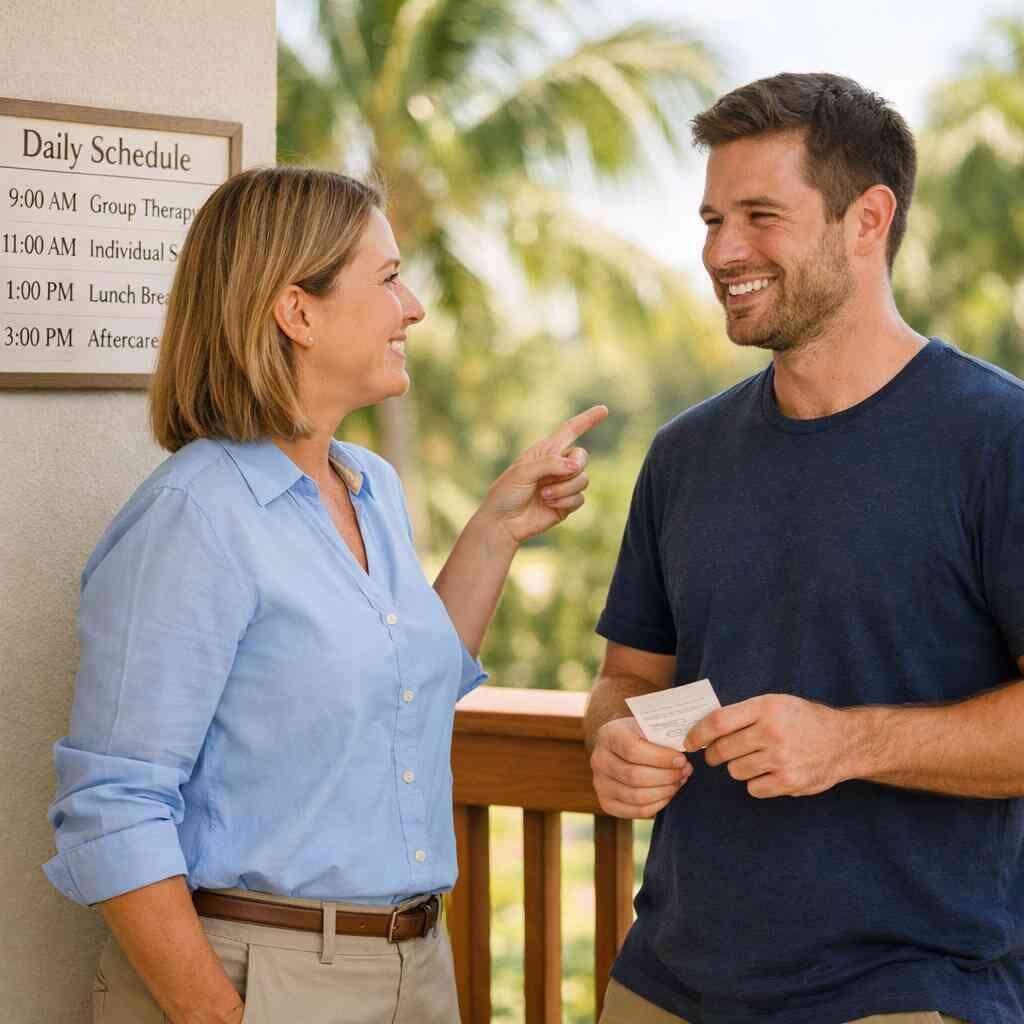
Aftercare planning and alumni support should include relapse prevention, coping skills, and clear next steps. It may also include therapy referrals, support groups, and living arrangements. The goal is not to keep people dependent on treatment forever. The goal is to keep the bridge strong while they cross it. If that bridge is weak, people fall back into old patterns fast.
What makes a program worth trusting when the stakes are this high
How to choose a rehab when you need licensed clinicians, clear intake process steps, and real case management
The question people ask most is how to choose a rehab without getting lost in marketing. Start with the basics. Are there licensed clinicians involved? Does the intake process explain what happens next? Is case management real, or just a brochure phrase? These questions tell you whether the program is organized enough to hold a difficult case. A strong program gives you more than admissions cheerfulness. It gives you clarity. It should explain how the residential treatment facility works, how transitions happen, and what support exists after stabilization. If you want a deeper framework, how to choose a private rehab in South Florida can help you compare options. Ask about DCF licensed status, Joint Commission accreditation, and whether the program follows SAMHSA guidelines. If the answers feel vague, keep looking. ### Why insurance verification matters for Aetna, Cigna, Blue Cross Blue Shield, and out-of-network benefits
Money stress can stop people before treatment starts. That is common. It is also fixable faster than most people think. Insurance verification should happen early, not after someone has already committed to a level of care. Ask about Aetna, Cigna, Blue Cross Blue Shield, and out-of-network benefits before making assumptions. You may also want to ask about self-pay options if needed.
The smartest move is to use insurance verification for Florida rehab as part of the first call. That step can clarify deductibles, coverage limits, and authorization needs. It can also reduce surprise bills later. For many families, this is the moment panic starts to fade. Numbers become concrete. Plans get real.
What to ask about alcohol addiction, cocaine detox Florida, fentanyl treatment, heroin recovery, prescription pill addiction, and benzodiazepine withdrawal
Substance-specific questions matter because withdrawal risks differ. Alcohol addiction can involve seizures or delirium tremens in severe cases. Benzodiazepine withdrawal can also be medically serious. Cocaine detox Florida needs may look different, since mood crash and sleep disruption often dominate. Fentanyl treatment and heroin recovery usually require careful opioid planning. Prescription pill addiction often includes shame, fear, and mixed histories that need respectful care.
Ask direct questions:
- How long is detox likely to take?
- What symptoms should we watch for?
- Are medications used when needed?
- What happens if anxiety spikes?
- Is there a plan for post-detox therapy?
Specific answers matter more than reassuring slogans. Real safety begins with real information.
How family therapy, family weekend, and intervention services can support healing without taking over the process
Family pain is real. Family help can be real too. But it works best when it is guided. Family therapy can improve communication, boundaries, and trust. Family weekend can give loved ones education without turning them into enforcers. Intervention services can help families speak with care when denial has taken over the room.
If you want structured family support, look for a family-program experience that teaches practical skills. The goal is not to blame the family. The goal is to reduce chaos and increase honesty. Families often mean well, but love without structure can still become enabling. Guided support helps everyone speak more clearly and listen better.
Why holistic recovery tools like yoga therapy, art therapy, mindfulness meditation, nutritional counseling, and life skills training can strengthen relapse prevention
Holistic recovery is not a replacement for therapy. It is a support to it. Yoga therapy can help people reconnect with their bodies. Art therapy can give form to feelings that are hard to name. Mindfulness meditation can slow reactive behavior. Nutritional counseling supports mood and energy. Life skills training helps people manage money, routines, and daily stress.
These tools matter because relapse prevention is not just about avoiding substances. It is about building a life that can hold discomfort without collapse. Here is what almost no online guide mentions: many relapses start with exhaustion, hunger, or disorganization. Teach the body and the schedule, and you often reduce the crisis before it grows. That is practical care.
What RECO Intensive, RECO Institute, RECO Immersive, and other levels of care signal about continuity across the recovery process
A strong system gives you continuity. RECO Health’s continuum includes RECO Intensive, RECO Island, RECO Immersive, and RECO Institute. That kind of structure signals that the program is not thinking in isolated episodes. It is thinking about movement across levels of care, housing, therapy, and support. For people in early recovery, that continuity can be the difference between fragile progress and stable growth.
If you want to understand the local options better, RECO Intensive in Delray Beach offers another point of reference. Continuity matters because recovery rarely happens in one clean jump. It happens in layers. It also happens through repetition, support, and time.
How to decide if a young adult rehab, professionals program, women’s rehab, men’s recovery track, LGBTQ affirmative treatment, or veterans addiction help model fits the person best
People do better when care fits their lived reality. A young adult rehab may address family dependence, identity stress, and early career disruption. A professionals program may need privacy, scheduling flexibility, and relapse prevention around high-pressure work. Women’s rehab and men’s recovery tracks can support gender-specific concerns, including trauma, shame, and peer dynamics. LGBTQ affirmative treatment matters when safety and belonging are part of the clinical picture. Veterans addiction help should account for trauma, service culture, and possible co-occurring mental health needs.
The right fit is not about labels alone. It is about fit, trust, and safety. The best program asks better questions before placing someone in treatment. That is how healing becomes more workable. Not perfect. Workable.
What forward motion looks like after the call, from insurance verification to placement in the right level of care in Delray Beach and greater South Florida
The most helpful next step is usually simple. Call. Share the main concerns. Confirm insurance. Ask about detox, residential care, PHP, or IOP. Then let the team help sort the level of care instead of guessing alone. That process should feel grounded, not dramatic.
If you are exploring Florida rehabs that take insurance, start with facts. Ask where treatment would happen, what the schedule looks like, and how transitions are handled. If placement is needed in Delray Beach or greater South Florida, the right program should help match the person to the next safe level. You do not need every answer today. Start with one phone call, and ask for clarity on the one thing that worries you most.
Frequently Asked Questions
Question: What makes What Makes RECO Health a Beachside Recovery Choice in 2026 stand out for someone looking for beachside recovery near Delray Beach?
Answer: RECO Health stands out because it pairs a calm coastal healing environment with a full continuum of care, which can matter a lot when someone is feeling overwhelmed, isolated, or unsure where to start. For people searching for Delray Beach rehab, private rehab, or a local rehab near me, the setting can help reduce stress while the clinical team focuses on the real work of recovery. RECO Health offers support across detoxification, residential treatment facility options, partial hospitalization program care, intensive outpatient, outpatient program Delray Beach support, and aftercare planning, so treatment can be matched to the person’s current needs rather than forcing a one-size-fits-all path.
Question: How does RECO Health approach dual diagnosis treatment for depression and addiction, anxiety treatment, PTSD treatment, and bipolar disorder therapy?
Answer: RECO Health’s approach to dual diagnosis treatment recognizes that substance use and mental health concerns often overlap and need to be addressed together as co-occurring disorders. That means someone dealing with depression and addiction, anxiety treatment needs, PTSD treatment, or bipolar disorder therapy is not treated as if the substance use exists in a vacuum. The care model emphasizes evidence-based treatment with licensed clinicians and may include cognitive behavioral therapy, dialectical behavior therapy, EMDR trauma therapy, group therapy activities, family therapy, and medication-assisted treatment when clinically appropriate. This kind of integrated care is especially important for people who have tried to manage one issue while the other kept pulling them back.
Question: What is PHP vs IOP, and how can RECO Health help people decide between a partial hospitalization program and intensive outpatient care?
Answer: PHP vs IOP usually comes down to how much structure a person needs right now. A partial hospitalization program is generally more intensive and structured, while intensive outpatient gives more flexibility for work, family, or gradual re-entry into daily life. At RECO Health, the goal is to help people find the right fit rather than rush them into the wrong level of care. Someone may need South Florida detox first, then residential treatment, then PHP, and later an outpatient program Delray Beach residents can realistically maintain. Others may be stable enough to step into mental health IOP or intensive outpatient sooner. The intake process should help clarify those next steps, along with insurance verification, case management, and aftercare support.
Question: Does RECO Health support substance-specific needs like cocaine detox Florida, opioid rehab Delray, fentanyl treatment, heroin recovery, prescription pill addiction, and benzodiazepine withdrawal?
Answer: Yes, RECO Health’s model is designed to address a wide range of substance-specific needs through individualized planning and evidence-based treatment. The clinical conversation may look very different for cocaine detox Florida than it does for opioid rehab Delray needs, fentanyl treatment, heroin recovery, prescription pill addiction, or benzodiazepine withdrawal. Some situations require close medical supervision, careful symptom monitoring, and medication-assisted treatment such as Vivitrol injections or Suboxone maintenance when clinically appropriate. The important thing is that the plan should be built around the person’s actual risks, history, and stability, not a generic template. That is one reason families often look for an alcoholism treatment center or Florida addiction treatment program that can handle more than one kind of need under one coordinated system.
Question: What support does RECO Health offer after formal treatment ends, and how do sober living resources, alumni program support, and relapse prevention fit in?
Answer: Aftercare planning is a major part of what helps people stay connected to recovery once the formal schedule ends. RECO Health emphasizes sober living resources, alumni program support, and practical relapse prevention planning so that progress can continue outside the treatment setting. That may include coping skills, life skills training, nutritional counseling, vocational support, family therapy, and connections to recovery communities like 12-step alternatives or SMART Recovery, depending on what fits the individual. For many people, long-term recovery is strengthened by structure that continues beyond discharge, because returning to old routines too quickly can make things harder. A thoughtful aftercare plan can help people stay grounded, supported, and focused on the next right step.
Question: How can families verify coverage and get started with RECO Health if they are comparing Florida rehabs that take insurance?
Answer: The best first step is usually insurance verification, especially for families comparing Florida rehabs that take insurance and trying to understand Aetna, Cigna, Blue Cross Blue Shield, out-of-network benefits, or self-pay options. RECO Health encourages people to ask direct questions about coverage, level of care, and the intake process so there is less confusion later. If someone is searching for how to choose a rehab, the most helpful factors are whether the program uses licensed clinicians, follows SAMHSA guidelines, and can explain placement clearly without pressure. Families can also ask about DCF licensed status, Joint Commission accreditation, case management, intervention services, and whether the program is a good fit for young adult rehab, professionals program needs, LGBTQ+ affirmative treatment, veterans addiction help, or gender-specific treatment. The goal is to make the path forward feel clearer and more manageable, not more overwhelming.
*”I feel like RECO treatment is one of the best in Florida. I have been to several treatment centers and RECO is definitely better in almost every area. I can honesty say all the employees genuinely care. They go out of their way to help us navigate through early recovery The group facilitators are the best I’ve seen in treatment. Ms Engrid, Ms V and Rabbi Mark are unbelievable. Rabbi really breaks down the science behind the disease while Ms Engrid keeps it real with us and is always reminding us that we can make it. She really brings a lot of good energy around the NA program. Ms V comes in and she a wonderful therapist who really understands things from the family side. She really helps me understand what our families are going through. Hands down, RECO has the best group facilitators I’ve ever seen . I know of some peers that feel the same way
Brock really does a great job with the alumni department. As I am writing this, I am at a talent show put on by RECO. There are around 75 people here all having a great time sober. The entire event was put on well. Clients/ alumni made dishes and everyone is enjoying dinner while watching some amazing talent. I’m including pics from tonight. While going through some of my own struggles, I could really feel RECO’s support throughout the community. Brock was in contact with me on a daily basis just letting me know RECO was there for me. The support was overwhelming.
Led by Carly, The behavioral techs are fantastic. We spend a lot of time with the techs as they are always hanging with us at our houses outside of groups. They genuinely love their jobs and you can see it. The techs are fantastic in letting us know they are here for us and they show support in any way they can even if it’s just to listen to us vent about something we are struggling with. Brandon, Becky, Carlos and Brian especially go out of their way to help things go smoothly.
On the therapy side, they are also great. The clinical director, David, has been doing this a long time and he gets exactly what we are going through. You can see how passionate he is about his work when he runs group. There is a healthy balance with the entire team and I can see how much time they spend discussing clients. They know everything about us and I feel like that really helps us build a healthy relationship with our therapist. The medical staff is also great. Led by Kathaleen, the entire staff is always on point. Viviana, Kathaleen’s right hand lady, works her tail off making sure everything runs smoothly on the medical side.”*- Buck F., a 5 star review from RECO Health on Google Business Reviews