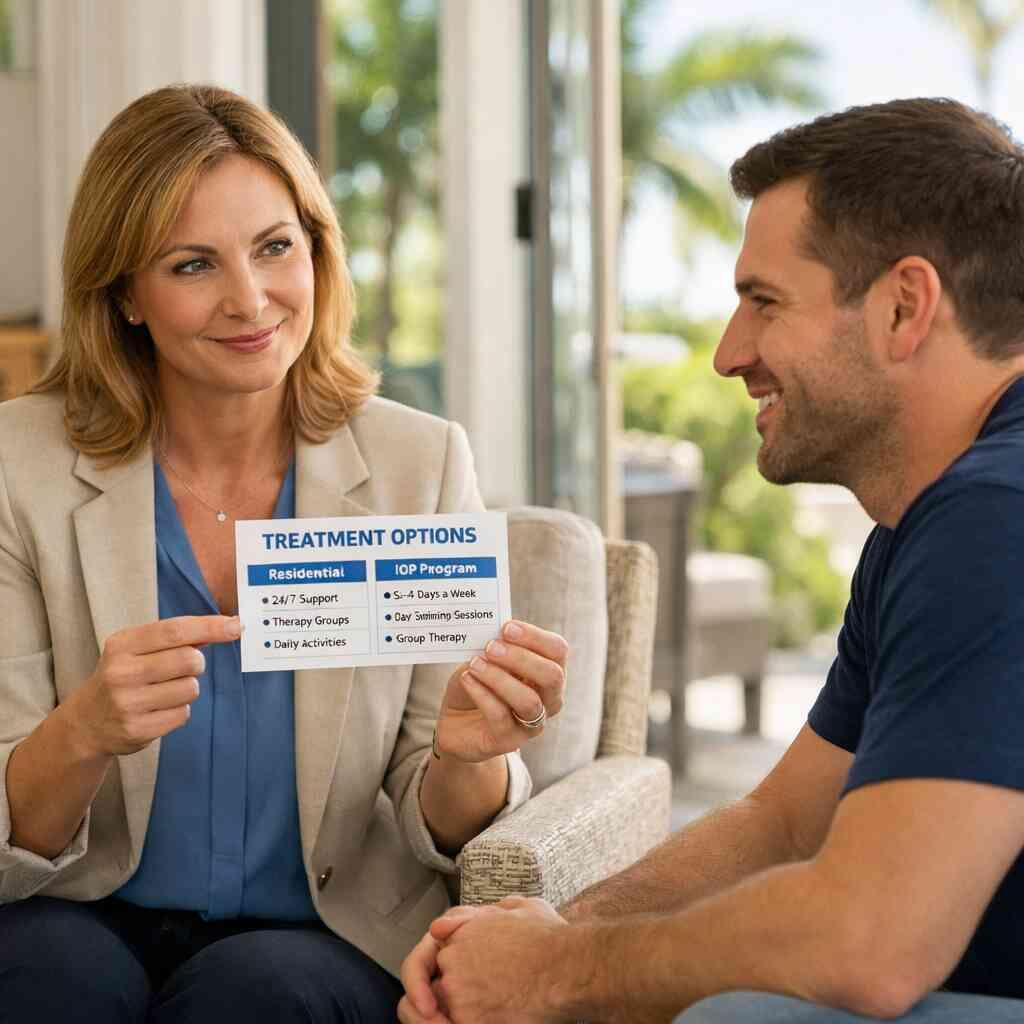
The Difference Between Residential Care and IOP at RECO Health
If you are comparing residential care vs IOP, the confusion is completely normal. The word “treatment” sounds simple until your family is staring at real choices, real risk, and real fear. Some people need a residential treatment facility with round-the-clock structure. Others can move through an intensive outpatient program while keeping work, school, or family […]
If you are comparing residential care vs IOP, the confusion is completely normal. The word “treatment” sounds simple until your family is staring at real choices, real risk, and real fear. Some people need a residential treatment facility with round-the-clock structure. Others can move through an intensive outpatient program while keeping work, school, or family responsibilities in place. The hard part is knowing which path fits right now.
What families in Delray Beach usually miss when they compare residential care and IOP
The real difference between a residential treatment facility and an intensive outpatient program
A residential treatment facility gives you a live-in setting with steady support, daily structure, and fewer outside triggers. An intensive outpatient program lets you live at home or in sober housing while attending treatment several days a week. That sounds like a simple scheduling difference, but it changes everything about safety, focus, and relapse risk. In Delray Beach rehab settings, that difference often decides whether someone can stabilize or keeps spiraling.
Here is the part most families miss: IOP is not “less serious.” It is simply a different tool. If you are looking at the difference between residential treatment and intensive outpatient at RECO Health, the real question is not convenience. It is whether your current life can support recovery work without constant pressure pulling you back.
“The team at Reco Health is incredibly professional, compassionate, and dedicated to providing comprehensive care. Their approach to substance abuse and mental health is holistic and personalized, ensuring that each client receives the support they need. I highly recommend Reco Health for anyone seeking quality addiction treatment and mental health services in Delray Beach Florida.”– Salvatore A., a 5 star review from RECO Health on Google Business Reviews
When a safe, structured setting matters more than flexibility
Some people say they want flexibility because they are trying to protect work, parenting, or privacy. That makes sense. Still, flexibility can become a problem when the home environment keeps feeding the problem. If alcohol is in the house, if pills are easy to reach, or if conflict is constant, residential care can create the calm needed for early change.
We hear this from families almost every week. A person may look “functional” from the outside, yet their nights are falling apart. A client from the Boca Raton area once described it plainly: he could keep a job, but he could not keep himself safe after dark. Residential care gave him distance from the cycle long enough to think clearly again. That is often the real benefit of inpatient rehab in Palm Beach County.
Why South Florida recovery plans often change after the first few days of assessment
Many people arrive thinking they already know the level of care they need. Then the assessment starts, and the picture shifts. That is normal. A good intake process looks at signs of addiction, sleep, withdrawal, mental health symptoms, and home stability. It also reviews trauma history, medication use, and whether you need insurance verification for Florida rehab before treatment can begin.
South Florida recovery plans often change after a few days because the body and mind reveal more once the fog starts lifting. Someone may seem ready for outpatient support, then show strong cravings, panic, or unsafe thinking once detox begins. Another person may need a short residential stay, then step down into IOP faster than expected. That is why a strong Florida addiction treatment program stays flexible without losing structure.
How insurance verification and intake timing can shape the level of care you start with
Insurance can affect timing more than people expect. If you are trying to enter treatment quickly, the admissions team may need to check benefits first, especially for private rehab or out-of-network benefits. That process can feel frustrating when you are already under stress. Still, it protects you from avoidable surprises later.
If timing is tight, ask about the intake process at a private rehab right away. Some people can begin with stabilization while benefits are being confirmed. Others may need to wait a short time for placement into the right level of care. In a coastal city like Delray Beach, where the recovery community is active and the pace can feel fast, clear intake steps reduce panic and help families make steadier decisions.
Why the right level of care is usually decided by risk, not preference
Signs of addiction that point toward residential treatment instead of outpatient support
Preference matters, but risk matters more. Residential care often fits when substance use is heavy, daily, or paired with unsafe behavior. It also fits when the person has repeated relapses, severe mood swings, or cannot stay away from drugs or alcohol at home. If someone is searching “drug rehab near me” after a frightening night, that is often a sign they need more support than a standard outpatient schedule can provide.
Look for these warning signs:
- Withdrawal symptoms that return quickly
- Using more than planned
- Missing work, school, or family duties
- Driving while impaired
- Hiding use or lying about it
- Physical danger during attempts to stop
When those patterns show up, a residential treatment facility can provide the pause needed for evidence-based treatment to work.
How dual diagnosis treatment changes the decision when depression and addiction or anxiety and addiction are both present
Many people do not just have a substance issue. They also have depression, anxiety, bipolar symptoms, PTSD, or another mental health condition. That is called dual diagnosis treatment or co-occurring disorders care. SAMHSA and NIDA both support treating both conditions together, not one at a time. If the depression stays untreated, the substance use often returns. If the substance use stays untreated, therapy cannot take hold.
That is why mental health IOP and residential care both need a strong clinical lens. A person with depression and addiction may need a higher level of monitoring early on. Someone with anxiety treatment needs more than a coping handout. They may need CBT, medication support, or trauma work once stabilization starts. For a closer look, dual diagnosis treatment for co-occurring disorders can help you understand how the pieces fit.
When PHP sits between residential care and IOP and keeps the plan steady
Sometimes the choice is not residential or IOP. Sometimes partial hospitalization program care sits in the middle. PHP gives you intensive daytime support without overnight housing. It can help if you need a lot of structure but do not need full residential supervision. That is why many people ask, “what is PHP vs IOP?” The answer is simple: PHP is usually more hours, more monitoring, and less independence.
Level of careBest fitMain advantageResidential careHigh relapse risk, unstable home, acute symptoms24/7 structurePHPSerious symptoms, but some home stabilityStrong daytime supportIOPSteadying after higher careFlexibility with clinical supportIf you are comparing programs, how to compare PHP and IOP in Palm Beach County can help you think more clearly about the fit.
What detox needs look like for alcohol, opioids, fentanyl, benzodiazepines, and cocaine before any schedule can work
Detox changes the plan fast. No schedule works well if the body is still in active withdrawal. Alcohol can bring shaking, sweating, or seizures. Opioids and fentanyl may cause body aches, vomiting, insomnia, and intense cravings. Benzodiazepine withdrawal can be dangerous and needs careful medical oversight. Cocaine detox may not be medically dangerous in the same way, but it can still bring deep exhaustion, depression, and agitation. That is why medical detox for addiction recovery is often the real starting point. South Florida detox needs may include alcohol rehab support, cocaine detox Florida care, opioid rehab Delray services, or fentanyl treatment. Some people need medication-assisted treatment, like Suboxone maintenance or Vivitrol injections, as part of stabilization. Others need time, monitoring, fluids, and sleep before they can think about therapy at all. ### How trauma therapy South Florida providers use CBT, DBT, and EMDR to match the right intensity 
Trauma and addiction often sit in the same room. Sometimes trauma came first. Sometimes substance use came first. Either way, the nervous system can stay stuck in survival mode. That is where CBT, DBT, and EMDR trauma therapy help. CBT, or cognitive behavioral therapy, helps you notice thought patterns that drive use. DBT, or dialectical behavior therapy, teaches distress tolerance and emotion regulation. EMDR can help process trauma memories without forcing you to relive them in a harsh way.
A woman from the west side of Palm Beach County once shared that she could not sit through a quiet evening without panic. Her use had started as a way to shut down that feeling. After a period of stabilization, trauma therapy South Florida providers used gradual EMDR and skills work to help her stay present. That is the kind of careful matching that keeps treatment from feeling overwhelming. For more detail, PTSD and trauma therapy in South Florida explains how that work is often paced.
The path forward at RECO Health when stability, skills, and aftercare all have to fit together
How RECO Intensive and the wider RECO continuum connect residential treatment, PHP, and intensive outpatient care
RECO Health was built around a continuum of care in behavioral health, so people can move between levels without losing connection. That matters. It means residential treatment, PHP, and IOP can support one another instead of acting like separate islands. For many people, that continuity lowers confusion and helps with long-term recovery. It also supports a smoother transition into housing, outpatient care, and alumni support.
If you want a broad view of the structure, RECO Intensive in Delray Beach reflects how the system works across levels. The point is not to rush. The point is to place you where the risk level matches the care level. That is especially important in a place like Delray Beach, where the beachside recovery environment can feel calm, but the real work still needs a clinical plan.
What daily life can look like in residential care versus an outpatient program Delray Beach residents can realistically maintain
Daily life in residential care is built around protection and repetition. You wake up in the program, eat there, attend groups, meet with licensed clinicians, and return to a predictable routine. That structure helps when cravings, shame, or fear are still loud. In an outpatient program Delray Beach residents can realistically maintain, the schedule is lighter, but the responsibility is higher. You need a stable home base, transportation, and enough emotional steadiness to use the tools you learn.
A useful way to think about it is this:
- Residential care removes distractions.
- PHP builds consistency.
- IOP tests recovery in real life.
- Outpatient treatment extends support after the intensive phase.
If your days already include work on Atlantic Avenue, school in Boca, or family care in South Florida, that reality should shape the level you choose. Best outpatient program options in South Florida can help you compare what is practical.
How family therapy, case management, and life skills training support long-term recovery
Recovery rarely depends on therapy alone. It also depends on logistics. That is why family therapy, case management, and life skills training matter. Family therapy can reduce blame and improve communication. Case management helps with appointments, referrals, and transitions. Life skills training can include budgeting, routine building, job readiness, and healthy coping. These supports may sound ordinary, but they often make the biggest difference after the first wave of crisis fades.
If family patterns have been strained, a weekend visit or family session can change the tone fast. The room feels different when people finally stop arguing about labels and start talking about safety. For more on this, our family support plans explain how support can include loved ones without losing clinical focus. In our experience, the biggest mistake is assuming family involvement means family control. It does not. It means shared understanding.
Why medication-assisted treatment, sober living resources, and aftercare planning matter after the main phase of care
The main phase of treatment is not the end of the work. It is the middle. Medication-assisted treatment can reduce cravings and help people stay in therapy long enough to build new habits. Sober living resources can add structure when home is not yet stable. Aftercare planning helps the transition feel less abrupt. That may include relapse prevention, support groups, 12-step alternatives, SMART Recovery, and follow-up therapy.
Here is a short truth most online guides miss: recovery gets harder when structure disappears too soon. A person may feel strong in treatment, then wobble during the first week back home. Good aftercare reduces that drop. It also supports alumni connection, which matters when the first stressful phone call or sleepless night hits. Guide to RECO Intensive reviews and what families ask can help you hear the questions families ask most often.
What a clear next decision looks like if you are comparing programs near 140 NE 4th Avenue Delray Beach FL 33483
If you are comparing programs near 140 NE 4th Avenue Delray Beach FL 33483, start with risk, not marketing. Ask where the person is most vulnerable right now. Ask whether detox is needed. Ask whether home is safe. Ask whether insurance verification is done. Then ask which level of care can actually hold the person steady long enough for healing to begin.
RECO Health works within the Delray Beach recovery community and serves South Florida with a full treatment continuum. That includes admissions support, mental health treatment, housing support, and step-down care. If you are weighing Florida rehabs that take insurance, Aetna, Cigna, and Blue Cross Blue Shield verification can be part of the conversation, along with self-pay options and out-of-network benefits. If you need help sorting that out, start with one call and one honest question. You do not have to solve everything today.
Frequently Asked Questions
Question: What is the difference between residential care and an intensive outpatient program at RECO Health, and how do I know which level is the right fit?
Answer: The main difference between residential care and IOP is the amount of structure and support. A residential treatment facility provides a live-in setting with 24/7 supervision, daily routines, and distance from outside triggers. An intensive outpatient program allows you to live at home or in sober living while attending treatment several days a week. At RECO Health, the right level of care is usually guided by risk, not convenience. If someone has severe signs of addiction, repeated relapse, an unsafe home environment, or needs South Florida detox first, residential care may be the safer starting point. If the person is more stable and can manage work, school, or family responsibilities while staying engaged in treatment, outpatient program Delray Beach options like IOP may be appropriate. The admissions and intake process is designed to look at the whole picture, including withdrawal risk, mental health IOP needs, dual diagnosis treatment, and aftercare planning. That kind of individualized approach helps people move into the level of care that best supports long-term recovery.
Question: In The Difference Between Residential Care and IOP at RECO Health, when does PHP fit between residential treatment and intensive outpatient?
Answer: Partial hospitalization program care, or PHP, can be a helpful middle step when someone needs strong daily support but does not require overnight housing. In many cases, PHP is more structured than IOP and less intensive than a residential treatment facility. That makes it useful for people transitioning out of inpatient rehab Palm Beach County services or stepping up from outpatient care when symptoms become harder to manage. At RECO Health, PHP can be part of a larger continuum of care that includes detox, residential treatment, PHP, intensive outpatient, and aftercare support. This matters because recovery is rarely one straight line. Some people need more time in structure before they can handle the independence of an intensive outpatient program. Others may move down the continuum as stability improves. If you are trying to figure out what is PHP vs IOP, the easiest way to think about it is this: PHP gives more hours and more clinical support, while IOP offers more flexibility with continued accountability.
Question: Does RECO Health provide support for dual diagnosis treatment, PTSD treatment, depression and addiction, and anxiety treatment?
Answer: Yes. Many people who seek Florida addiction treatment are dealing with both substance use and a mental health condition, also known as co-occurring disorders or dual diagnosis. At RECO Health, the clinical approach is built to address both sides together because treating one without the other often leaves the bigger problem unresolved. Someone experiencing depression and addiction, anxiety treatment needs, PTSD treatment, bipolar disorder therapy, or trauma-related symptoms may benefit from a combination of evidence-based treatment, cognitive behavioral therapy, dialectical behavior therapy, EMDR trauma therapy, group therapy activities, and family therapy. The intensity of care depends on how stable the person is at the time of admission. For some, residential care is the safest first step. For others, a mental health IOP may be more appropriate once symptoms are under better control. RECO’s continuum is intended to support people at different stages of healing while keeping the treatment plan focused, compassionate, and clinically grounded.
Question: How does detox and medication-assisted treatment work for alcohol rehab, opioid rehab Delray, fentanyl treatment, heroin recovery, or prescription pill addiction?
Answer: Detox is often the first clinical step before therapy can be effective. The right approach depends on the substance involved and the level of withdrawal risk. Alcohol rehab may require close monitoring because alcohol withdrawal can become dangerous. Opioid rehab Delray care, fentanyl treatment, heroin recovery, and prescription pill addiction often require medical oversight as well, especially when cravings, insomnia, nausea, or severe discomfort are present. Benzodiazepine withdrawal can also be especially serious and should never be handled casually. Depending on the situation, medication-assisted treatment may be part of the plan, including options such as Suboxone maintenance or Vivitrol injections when clinically appropriate. The purpose of detox and stabilization is not to rush recovery, but to create enough physical and emotional steadiness for evidence-based treatment to begin. If you are comparing Florida rehabs that take insurance, it is also wise to ask about insurance verification, out-of-network benefits, and self-pay options early in the admissions process so there are fewer delays in getting care started.
Question: How does RECO Health support long-term recovery after residential care or IOP, and what should families ask about aftercare planning?
Answer: Long-term recovery usually depends on what happens after the most intensive phase of treatment ends. RECO Health emphasizes aftercare planning so the transition from residential care or IOP does not feel abrupt. That can include relapse prevention planning, coping skills, case management, life skills training, sober living resources, alumni program connection, and ongoing support that fits the person’s real life. Families often ask whether the next step should be sober living, continued outpatient program Delray Beach support, family therapy, or a combination of services. Those are important questions because stability outside treatment can be just as important as the therapy itself. In some cases, 12-step alternatives or SMART Recovery may also be part of the recovery path, depending on the person’s needs and preferences. RECO Health’s broader continuum is designed to support people through change rather than assume one stage of care solves everything. If you are exploring Delray Beach rehab options near 140 NE 4th Avenue Delray Beach FL 33483, asking clear questions about intake process, support services, and aftercare planning can help you choose with more confidence.